CVC Words Worksheets for Kindergarten: Building Phonics Skills Step by Step
Oh My Homeschool·
A child reading a beginner phonics book at home
If your kindergartner is learning to read, you've probably heard the term "CVC words." These simple three-letter words — like cat, dog, and pin — are the first real words most children learn to decode on their own. CVC words worksheets for kindergarten give children structured practice blending letter sounds into words, building the phonics foundation that makes independent reading possible. Whether you're homeschooling or supplementing classroom learning at home, understanding how to teach CVC words effectively can make a meaningful difference in your child's reading journey. This guide walks you through everything you need to know — from what CVC words are to step-by-step teaching strategies, hands-on activities, and free printable worksheets.
What Are CVC Words?
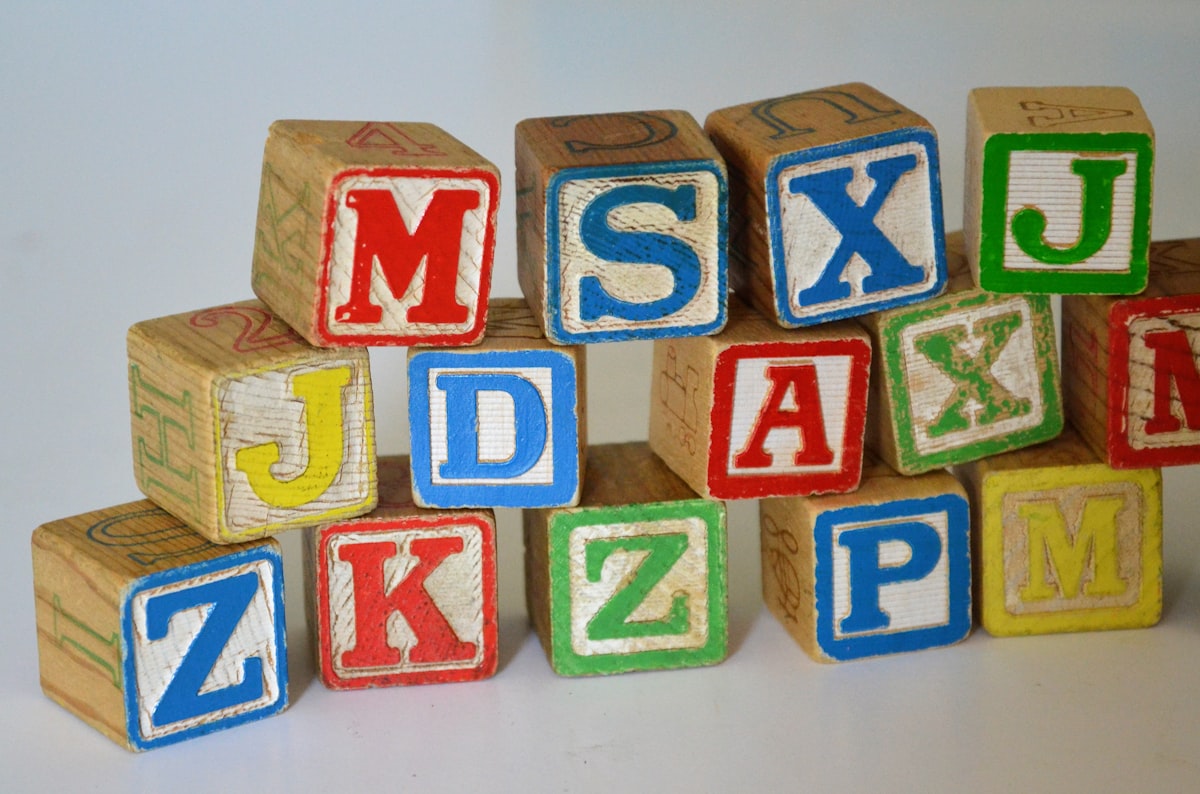
Colorful wooden alphabet blocks arranged on a surface
CVC stands for Consonant-Vowel-Consonant — the simplest word structure in English. Each CVC word has exactly three letters: a consonant, a short vowel in the middle, and another consonant at the end. Think of words like cat (c-a-t), bed (b-e-d), sit (s-i-t), hop (h-o-p), and cup (c-u-p).
What makes CVC words special for beginning readers is their predictability. Every letter makes its most basic sound. There are no silent letters, no tricky vowel teams, no consonant blends to untangle. A child who knows the sounds of the letters c, a, and t can blend them together to read the word "cat." That moment — the first time a child decodes a real word independently — is one of the most exciting milestones in early literacy.
CVC Words vs. Sight Words
CVC words and sight words serve different but complementary roles in learning to read. CVC words are — children sound out each letter and blend the sounds together. Sight words are — children learn to recognize them instantly without sounding them out. Some common sight words like "the," "was," and "said" don't follow standard phonics rules, which is why they need to be memorized. Many CVC words, however, are also common sight words: "can," "not," "and," "got." When your child learns these as CVC words first, they're building both decoding skills and sight word recognition at the same time. For a deeper look at the sight word side of this equation, read our guide on .
CVC words aren't just another reading exercise — they're the gateway to phonics-based reading. The Science of Reading, a body of research spanning decades, confirms that systematic phonics instruction (teaching children the relationships between letters and sounds in a structured sequence) is one of the most effective approaches to reading instruction. CVC words are where that systematic instruction begins.
Building the Decoding Foundation
When a child successfully reads a CVC word, they're practicing the most fundamental reading skill: blending. Blending is the ability to take individual sounds (/k/ + /æ/ + /t/) and push them together into a recognizable word ("cat"). This skill transfers directly to longer and more complex words later. A child who can blend "cat" can eventually blend "clap," "stamp," and "chapter" — the muscle is the same, just applied to more sounds. Without a solid CVC foundation, children often develop guessing habits instead. They might look at the first letter and guess a word, or rely entirely on picture clues. These strategies work in simple picture books but fail dramatically as texts become more complex.
The Reading Progression
CVC words fit into a broader phonics progression that looks like this:
Letter recognition — knowing what each letter looks like
Letter sounds — knowing what sound each letter makes
CVC words — blending three sounds into words (where your kindergartner is now)
Word families — recognizing patterns like -at, -ig, -op
CVCe words — long vowel words with silent e (like "cake," "pine")
Consonant blends and digraphs — words like "stop," "chip," "ship"
Multisyllabic words — putting it all together
Each stage builds on the one before it. Mastering CVC words gives your child the confidence and skills to move through this progression steadily.
Is Your Child Ready for CVC Words?
Before diving into CVC word instruction, check that your child has a few prerequisite skills in place. They don't need to have mastered every letter of the alphabet, but they do need a working foundation.
Readiness Checklist
Knows at least 15-20 letter sounds — They can look at a letter and tell you its sound (not just its name). Focus on the most common consonants (s, t, n, m, p, b, d, g, r, l) and all five short vowels (a, e, i, o, u).
Can identify beginning sounds in words — When you say "ball," they can tell you it starts with /b/.
Has basic phonemic awareness — They can clap syllables in words and hear rhyming words.
Can hold a sequence of sounds — When you say three separate sounds slowly (/d/... /o/... /g/), they can remember all three.
If your child isn't there yet, spend a few weeks on letter sound practice and phonemic awareness activities before introducing CVC words. Pushing too early creates frustration; waiting until they're ready creates confidence.
How to Teach CVC Words at Home: Step by Step
A parent and child reading together on a couch
Teaching CVC words doesn't require a teaching degree or expensive curriculum. With a clear method and consistent practice, you can guide your child through this stage effectively at home.
Step 1: Start with Short A Words
Begin with the short a sound because it's the most common and easiest vowel sound for most children. Start with a small set of 5-8 words from the -at family: cat, hat, mat, sat, bat, rat, fat, pat. Using a word family (words that share the same ending) helps children see patterns. Once they can read "cat," changing just the first letter to read "hat" feels manageable rather than overwhelming.
Step 2: Model the Blending Process
Show your child exactly how blending works. Use letter cards, magnetic letters, or simply write the letters on a whiteboard. Point to each letter as you say its sound slowly: "/k/... /ă/... /t/." Then slide your finger under all three letters as you blend the sounds together smoothly: "cat." Have your child watch and listen several times before asking them to try. The key is making the transition from individual sounds to blended word as smooth as possible — avoid choppy, disconnected sounds.
Step 3: Practice with Manipulatives
Physical letter tiles, magnetic letters on a fridge, or printed letter cards make CVC words tangible and interactive. Have your child build words by placing individual letters in order. Then ask them to change one letter to make a new word: "You made cat. Can you change the first letter to make hat?" This word-building exercise reinforces both blending and the concept that changing one sound changes the whole word.
Step 4: Expand to Other Vowels
Once your child is comfortable with short a words, introduce short o (hot, dog, mop), then short i (sit, pig, fin), then short e (bed, red, ten), and finally short u (cup, bug, run). Introduce one new vowel sound at a time and practice until your child can read words with that vowel confidently before moving on. Mix in review of previously learned vowels so they don't forget earlier words.
Step 5: Mix Word Families
After your child knows words across multiple vowel sounds, start mixing them together. This is where real reading skill develops — the child must look at the middle vowel and determine which sound it makes, rather than assuming all words in a set use the same vowel. Use worksheets and word cards that combine words from different families: cat, dog, pin, bed, cup all in the same exercise.
Step 6: Read CVC Words in Sentences
The ultimate goal is reading words in context, not in isolation. Create simple sentences using only CVC words and common sight words your child knows: "The cat sat on a mat." "A big dog can run." "Mom got a red cup." These decodable sentences give children the experience of reading connected text — and the pride of reading a whole sentence on their own.
Fun CVC Word Activities for Kindergartners
Worksheets are valuable, but variety keeps learning engaging. Mix these hands-on activities into your weekly routine alongside worksheet practice.
Sound Boxes (Elkonin Boxes)
Draw three connected boxes on paper. Say a CVC word, and have your child push a token (coin, button, or small toy) into each box as they say each sound. For "dog": push a token into box 1 while saying /d/, box 2 for /o/, box 3 for /g/. This builds phonemic segmentation — the ability to break words apart into individual sounds — which is the reverse of blending and equally important.
CVC Word Building with Magnetic Letters
Place vowel letters in the center of a magnetic board. Let your child pick consonants to place before and after the vowel to build words. Can they make a real word? This open-ended activity encourages experimentation and builds letter-sound fluency through play.
Roll and Read Game
Write CVC words on a game board or list. The child rolls a die and reads the word that matches the number rolled. If they read it correctly, they earn a point. Simple, fast, and surprisingly motivating for competitive kids.
CVC Word Hopscotch
Write CVC words in chalk on a hopscotch grid outside. Your child hops to each square and reads the word before advancing. Physical movement combined with reading practice is especially effective for active learners who struggle with desk work.
Word Family Sorting
Write 15-20 CVC words on cards. Have your child sort them into word family groups (-at words, -ig words, -op words). This reinforces pattern recognition and helps children see the structure within words rather than treating each word as a completely new puzzle.
Using CVC Worksheets Effectively
A child practicing writing at a desk with pencils and worksheets
CVC words worksheets provide the structured, repetitive practice that builds reading fluency. The key is choosing the right types of worksheets and using them as part of a balanced approach rather than the entire program.
Best Types of CVC Worksheets
Sound-it-out worksheets show a picture and three letter boxes. The child identifies the picture (e.g., a cat), then writes the correct letter in each box: c-a-t. This combines phonemic segmentation with letter-sound correspondence.
Missing middle vowel worksheets present a picture and a word with the vowel missing: c_t (with a picture of a cat). The child determines the correct short vowel sound and writes it in. This is especially useful because the middle vowel is the hardest sound for most children to hear and identify.
CVC word matching worksheets pair pictures with words. The child draws a line from each picture to the correct CVC word, practicing reading comprehension alongside decoding.
Read and color worksheets provide simple sentences with CVC words and instructions to color a picture based on what they read: "The cat is red. The dog is brown." This integrates reading comprehension with phonics practice.
Word family wheels place a word ending (-at, -an, -ig) in the center with consonants around the edge. The child rotates through consonants to build and read different words in the family.
Creating a Weekly Practice Schedule
A consistent routine produces the best results. Here's a sample weekly plan that balances worksheets with hands-on activities:
Monday: Introduce new CVC words (3-5 words). Practice with magnetic letters. Complete a sound-it-out worksheet.
Tuesday: Review with flashcards. Complete a missing middle vowel worksheet.
Wednesday: Do a hands-on activity (sound boxes, word building). Complete a matching worksheet.
Thursday: Play a CVC game (roll and read, hopscotch). Complete a read-and-color worksheet.
Keep sessions short — 10 to 15 minutes of focused phonics practice is more effective than 30 minutes of frustrated repetition. If your child is engaged and asking for more, let them continue. If they're losing focus, stop and come back tomorrow.
Use this reference list to plan your instruction. Start with short a and progress through each vowel.
Short A Words
-ab
-ad
-ag
-am
-an
-ap
-at
cab
bad
bag
dam
ban
cap
bat
dab
dad
gag
ham
can
gap
cat
jab
had
nag
jam
fan
lap
fat
tab
mad
rag
ram
man
map
hat
sad
tag
yam
pan
nap
mat
wag
ran
rap
pat
tan
tap
rat
van
zap
sat
Short E Words
-ed
-eg
-en
-et
bed
beg
den
bet
fed
leg
hen
get
led
peg
men
jet
red
pen
let
wed
ten
met
net
pet
set
vet
wet
Short I Words
-ib
-id
-ig
-in
-ip
-it
bib
bid
big
bin
dip
bit
fib
did
dig
din
hip
fit
rib
hid
fig
fin
lip
hit
kid
gig
kin
nip
kit
lid
jig
pin
rip
lit
rid
pig
sin
sip
pit
rig
tin
tip
sit
wig
win
zip
wit
Short O Words
-ob
-od
-og
-op
-ot
bob
cod
bog
cop
cot
cob
god
cog
hop
dot
gob
mod
dog
mop
got
job
nod
fog
pop
hot
mob
pod
hog
top
jot
rob
rod
jog
lot
sob
log
not
pot
rot
Short U Words
-ub
-ud
-ug
-un
-up
-ut
cub
bud
bug
bun
cup
but
hub
dud
dug
fun
pup
cut
pub
mud
hug
gun
sup
gut
rub
jug
nun
hut
sub
mug
pun
jut
tub
pug
run
nut
rug
sun
put
tug
rut
This list contains over 200 CVC words. You don't need to teach them all — focus on the most common and useful words in each family, and your child will naturally generalize the patterns to read unfamiliar CVC words independently.
Common Struggles and How to Help
Learning supplies including colored pencils and rulers on a wooden desk
Every child encounters some bumps on the road to CVC mastery. Here are the most common challenges and practical solutions.
"My Child Can't Blend the Sounds Together"
This is the most common struggle. The child says the individual sounds — "/k/... /a/... /t/" — but can't push them into a smooth word. Solution: Try continuous blending instead of segmented blending. Instead of saying three separate sounds, stretch the sounds and connect them without stopping: "caaaat." Gradually speed up until it sounds like a natural word. You can also try body blending: touch your shoulder for the first sound, elbow for the middle sound, and hand for the last sound, then run your hand down your arm smoothly while blending all three.
"My Child Always Gets the Middle Vowel Wrong"
Short vowel sounds — especially short e and short i — are notoriously difficult for young children to distinguish. Solution: Focus on one vowel at a time until it's solid before introducing a similar-sounding one. Use mirror practice: have your child watch their mouth shape as they say each vowel sound. Short a (mouth wide open like a doctor's visit), short o (mouth round), and short u (mouth barely open) are easier to distinguish physically. For e and i, exaggerate the sounds and use anchor words: "e like in egg" and "i like in itch."
"My Child Memorizes Words Instead of Sounding Them Out"
Some children memorize CVC words as whole units rather than decoding them. This seems like progress but becomes a problem when they encounter new words. Solution: Regularly introduce brand-new CVC words they haven't seen before. If they can read a new word on the first try by sounding it out, they truly understand the decoding process. Also use nonsense CVC words (like "bim," "tof," "rud") occasionally — since these can't be memorized, they test pure decoding skill.
"My Child Gets Frustrated and Wants to Quit"
Reading is hard work for young brains. Solution: Keep sessions short (10-15 minutes maximum). Always start with words your child knows well to build confidence before tackling new material. End every session on a success — even if you need to go back to an easy word to finish positively. Celebrate effort, not just accuracy. And remember that some children need more time than others. If CVC words aren't clicking after consistent practice, return to letter sounds and phonemic awareness for a few more weeks. There's no rush.
What Comes After CVC Words?
Once your child can confidently read CVC words across all five short vowels and in mixed word families, they're ready for the next steps in their phonics journey.
Word families and rhyming patterns deepen CVC knowledge. Your child begins to recognize that changing just the first sound in a word family creates a new word, which accelerates their reading speed.
CVCe words (also called "magic e" or "silent e" words) introduce long vowel sounds. Words like cake, pine, rope, and tube follow a pattern your child can learn systematically: "When there's an e at the end, the vowel says its name."
Consonant blends combine two consonant sounds at the beginning or end of words: stop, clap, jump, bend. Your child already knows how to blend — now they're blending four or five sounds instead of three.
Consonant digraphs introduce letter pairs that make a single new sound: sh, ch, th, wh. Words like "ship," "chip," and "thin" are just CVC words with a digraph replacing one consonant.
Each of these stages builds directly on the CVC foundation your child is building now. The decoding skills, the blending muscle, the confidence in sounding out unfamiliar words — it all starts here.
Start Building Your Child's Phonics Foundation Today
CVC words are where reading begins to feel real for young children. The first time your kindergartner sounds out "cat" or "dog" and sees their face light up with understanding — that moment is worth every minute of practice. Start with short a words, keep sessions short and fun, mix worksheets with hands-on activities, and trust the process. Your child is building the skills that will carry them from three-letter words to chapter books and beyond.