How to Teach Probability to Kids: A Fun, Hands-On Guide
Oh My Homeschool·
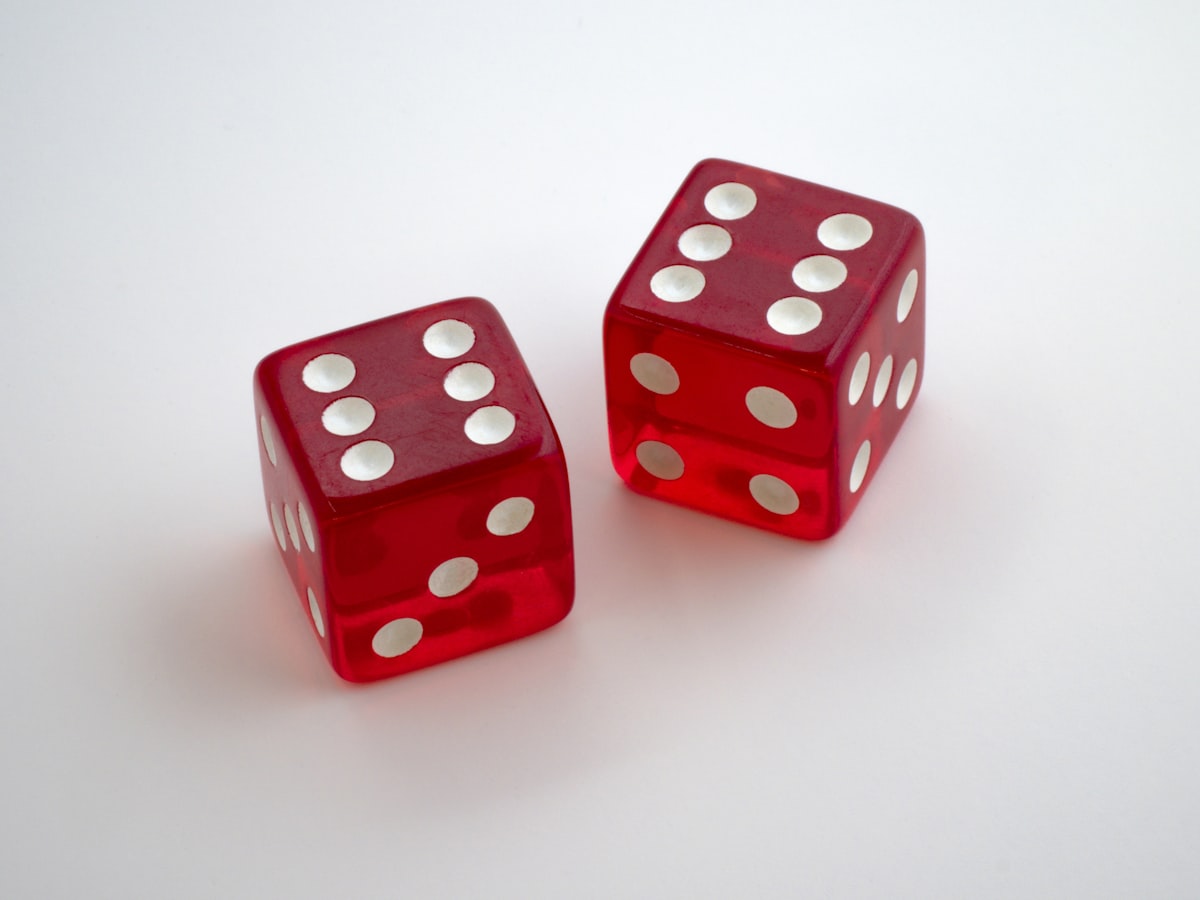
Colorful dice on a table, representing probability and chance
"What are the chances?" It is a question kids ask naturally — about the weather, about winning a game, about whether they will get pizza for dinner. Probability is the math behind that question, and it is one of the most practical branches of mathematics your child will ever learn.
Yet probability often gets rushed through in school or saved for late middle school, leaving kids without the intuition they need to reason about uncertainty. The good news is that probability is uniquely well-suited to hands-on learning. A bag of marbles, a coin, a deck of cards — these everyday objects become powerful teaching tools.
This guide walks you through how to teach probability at home, starting with simple experiments in 3rd grade and building toward formal models by 7th grade.
Why Probability Matters
Probability is not just a math topic — it is a life skill. Here is why it deserves serious attention in your homeschool:
Decision-making — understanding risk and likelihood helps children make better choices, from games to real-world situations
Data literacy — in a world flooded with statistics, percentages, and predictions, probability is the foundation for interpreting information critically
Scientific thinking — experimental probability mirrors the scientific method: predict, test, analyze, revise
Financial literacy — concepts like expected value and risk assessment connect directly to personal finance
Children who develop strong probability intuition become better thinkers across every subject — they learn to weigh evidence, question assumptions, and reason under uncertainty.
probabilitystatisticsmath worksheetshomeschool mathhands-on math
Probability skills develop across grade levels. While the Common Core formally introduces probability in Grade 7, most state curricula and many homeschool programs begin building intuition much earlier.
Grade
Key Concepts
3–4
Certain, likely, unlikely, impossible; simple experiments with coins and dice
5
Expressing probability as fractions; experimental vs. theoretical probability
6
Probability as a number between 0 and 1; modeling simple events
7
Formal probability models; compound events; sample spaces; simulations
The key is building intuition before formulas. A child who has flipped a coin 100 times and recorded the results will understand probability far more deeply than one who memorizes "1/2" from a textbook.
Getting Started: The Language of Probability
A child learning about chance and probability with hands-on activities
Before diving into numbers, help your child build a vocabulary for talking about chance. This is especially important for grades 3–4.
The Probability Scale
Introduce four anchor words along a scale:
Impossible — it will never happen (rolling a 7 on a standard die)
Unlikely — it probably will not happen, but it could (rolling a 6 three times in a row)
Likely — it will probably happen (drawing a red marble from a bag with 9 red and 1 blue)
Certain — it will definitely happen (the sun rising tomorrow)
Activity: Write 10 events on index cards and have your child sort them along a "probability line" from impossible to certain. Use events they care about:
"It will snow in July" (unlikely or impossible depending on where you live)
"You will eat something today" (certain)
"A coin will land on heads" (equally likely — right in the middle)
"You will see a dog on your next walk" (likely)
This sorting activity builds the conceptual foundation that probability lives on a spectrum, not in a binary yes/no world.
Fairness and Equal Chance
Another essential early concept is fairness. Ask your child:
"Is this game fair?" — a game where each player has the same chance of winning
"Is this coin fair?" — each side has an equal chance of landing up
"Is this spinner fair?" — each section is the same size
Fairness connects directly to the idea of equally likely outcomes, which is the bedrock of theoretical probability.
Hands-On Probability Activities
The best way to teach probability is to let kids experiment. Here are activities organized by difficulty level.
Level 1: Coin Flips and Dice (Grades 3–4)
Coin Flip Experiment:
Predict: "If I flip this coin 20 times, how many heads will I get?"
Flip and record results in a tally chart
Compare prediction to actual results
Repeat with 50 flips, then 100 flips
Discuss: "Why does the result get closer to half-and-half with more flips?"
This introduces the Law of Large Numbers without naming it — the more trials you run, the closer your experimental results get to the theoretical probability.
Dice Roll Investigation:
Roll a die 60 times and tally each number
Ask: "Were all numbers equally likely? Did any number come up more than others?"
Calculate: "Each number should appear about 10 times out of 60. How close were we?"
Graph the results as a bar chart
Practice these concepts with our probability worksheets designed for grades 4 through 7 with progressive difficulty levels.
Level 2: Bags, Spinners, and Cards (Grades 4–5)
Dice and game pieces for probability learning
Marble Bag Probability:
Put colored marbles (or colored slips of paper) in a bag:
Start simple: 3 red, 1 blue. "What is the probability of drawing red?"
Draw and replace 20 times. Record results.
Express the theoretical probability as a fraction: 3/4
Compare experimental results to the theoretical probability
Change the mix: 2 red, 2 blue, 1 green. Repeat.
This is where fractions meet probability directly. A child who understands that 3 out of 4 marbles are red can write P(red) = 3/4.
Spinner Experiments:
Make spinners with different-sized sections using a paper plate and a pencil-and-paperclip spinner:
Equal sections: "Is this spinner fair?"
Unequal sections: "Which color are you most likely to land on? Why?"
Numbered sections: "What is the probability of spinning a number greater than 3?"
Card Probability:
A standard deck of cards is a rich probability tool:
"What is the probability of drawing a heart?" (13/52 = 1/4)
"What is the probability of drawing a face card?" (12/52 = 3/13)
"What is the probability of drawing a red card?" (26/52 = 1/2)
Level 3: Formal Probability and Compound Events (Grades 6–7)
At this level, students move from experiments to formal models.
Key concepts to introduce:
Sample space — the complete list of all possible outcomes
Theoretical probability — P(event) = favorable outcomes / total outcomes
Experimental probability — P(event) = times event occurred / total trials
Complement — P(not A) = 1 - P(A)
Compound Events Activity:
Use two dice to explore compound probability:
"What is the probability of rolling a sum of 7?"
List all possible combinations (1+6, 2+5, 3+4, 4+3, 5+2, 6+1) — that is 6 out of 36 possible outcomes
Build a sample space table (6×6 grid)
Compare: "Is a sum of 7 more likely than a sum of 2? Why?"
Tree Diagrams:
Tree diagrams help visualize multi-step probability:
Flip a coin and roll a die. How many total outcomes? (2 × 6 = 12)
Draw the tree: first branch = heads/tails, second branch = 1/2/3/4/5/6
"What is the probability of getting heads AND a 4?" (1/12)
Understanding where children struggle helps you prevent misconceptions before they take root.
The Gambler's Fallacy
"I've flipped heads five times in a row, so tails must be next!"
This is the most common probability misconception. Each flip is independent — the coin does not remember what happened before. Address this directly:
Ask: "Does the coin know it landed on heads last time?"
Demonstrate with 20 flips after a streak — the coin still lands on heads about half the time
Confusing "Unlikely" with "Impossible"
Children often think that low-probability events cannot happen. Remind them:
Unlikely events happen all the time — someone wins the lottery every week
"Low probability" means it happens rarely, not never
Ignoring Sample Size
After flipping heads 3 times out of 5, a child might conclude: "This coin is unfair — heads came up 60% of the time!"
Help them understand that small samples are unreliable:
Flip 100 times instead of 5
Compare results: 5 flips might give 60% heads, but 100 flips will likely give closer to 50%
Treating All Outcomes as Equally Likely
When rolling two dice, children often assume all sums (2 through 12) are equally likely. The sample space table from the compound events activity above is the perfect tool to correct this — there is only one way to roll a 2 (1+1) but six ways to roll a 7.
Connecting Probability to Real Life
Probability becomes meaningful when children see it in the world around them.
Weather forecasts: "There's a 30% chance of rain. What does that actually mean? Should we bring an umbrella?" This is a perfect dinner-table probability discussion.
Sports: "If a basketball player makes 70% of free throws, what is the probability she misses the next one?" Sports statistics are filled with probability.
Games: Board games, card games, and video games all involve probability. Analyze the games your child already plays: "What are the chances of rolling doubles in Monopoly?" (6/36 = 1/6)
Genetics: For older students, basic genetics uses probability directly. "If both parents carry a recessive gene, what is the probability their child will express it?" (1/4)
Food choices: "If I close my eyes and pick a snack from the pantry, what are the chances I grab a granola bar?" Count the options and calculate.
Building a Practice Routine
A student practicing probability problems with worksheets
Probability benefits from regular, short practice sessions rather than long cramming:
Start with experiments — spend 10 minutes doing a hands-on activity (coin flips, dice rolls, card draws)
Record and discuss — always record results and compare to predictions
Move to worksheets — once concepts are solid, practice with structured problems
Connect daily — point out probability in everyday situations
If your child finds probability confusing, here are targeted strategies:
If they cannot express probability as a fraction: Go back to concrete objects. Put 3 red and 2 blue marbles in a bag. "How many total? How many red? So the probability of red is 3 out of 5, or 3/5." Practice with fraction worksheets alongside probability.
If they confuse experimental and theoretical: Run the same experiment multiple times. "The theoretical probability of heads is 1/2. But we got 7 heads out of 10 flips. Let's flip 90 more times and see what happens to our total." The experimental probability will converge toward the theoretical.
If compound events overwhelm them: Always start with a visual — tree diagrams or sample space tables. Do not skip to formulas. "Let's draw every possibility before we count."
If word problems are difficult: Practice translating probability language. "At least one" means "one or more." "At most two" means "two or fewer." Our word problems worksheets help build the reading comprehension skills that support math word problems.
CCSS.MATH.CONTENT.7.SP.C.5 — Understand that the probability of a chance event is a number between 0 and 1 that expresses the likelihood of the event occurring. Larger numbers indicate greater likelihood.
CCSS.MATH.CONTENT.7.SP.C.6 — Approximate the probability of a chance event by collecting data on the chance process that produces it and observing its long-run relative frequency, and predict the approximate relative frequency given the probability.
CCSS.MATH.CONTENT.7.SP.C.7 — Develop a probability model and use it to find probabilities of events. Compare probabilities from a model to observed frequencies; if the agreement is not good, explain possible sources of the discrepancy.
CCSS.MATH.CONTENT.7.SP.C.8 — Find probabilities of compound events using organized lists, tables, tree diagrams, and simulation.
While formal probability appears in the Grade 7 standards, the hands-on activities in this guide build the experimental foundation that makes those formal concepts accessible. The progression from physical experiments to written models mirrors exactly how the standards intend probability to be learned.
Start Exploring Probability Today
Probability is one of the rare math topics where a kitchen table, a coin, and a pair of dice are all you need to get started. The most important thing is to let your child experiment — predict, test, record, and discuss.
Here is your action plan:
Start with language — teach "impossible, unlikely, likely, certain" and sort everyday events on a probability line
Experiment first — flip coins, roll dice, draw marbles before introducing any formulas
Record everything — tally charts and bar graphs make results visible and discussable
Build to fractions — once they have intuition, connect probability to fractions: "3 out of 5 marbles are red, so P(red) = 3/5"
Practice regularly — grab our free probability worksheets for 10 minutes of focused practice at each level
The child who learns to think probabilistically today becomes the adult who evaluates risks wisely, interprets data critically, and makes decisions grounded in evidence rather than guesses.
Grade 5medium
Probability Adventures: Finding Chances and Outcomes