Handwriting and Brain Development in the Age of AI: Why Writing by Hand Still Matters
Oh My Homeschool·
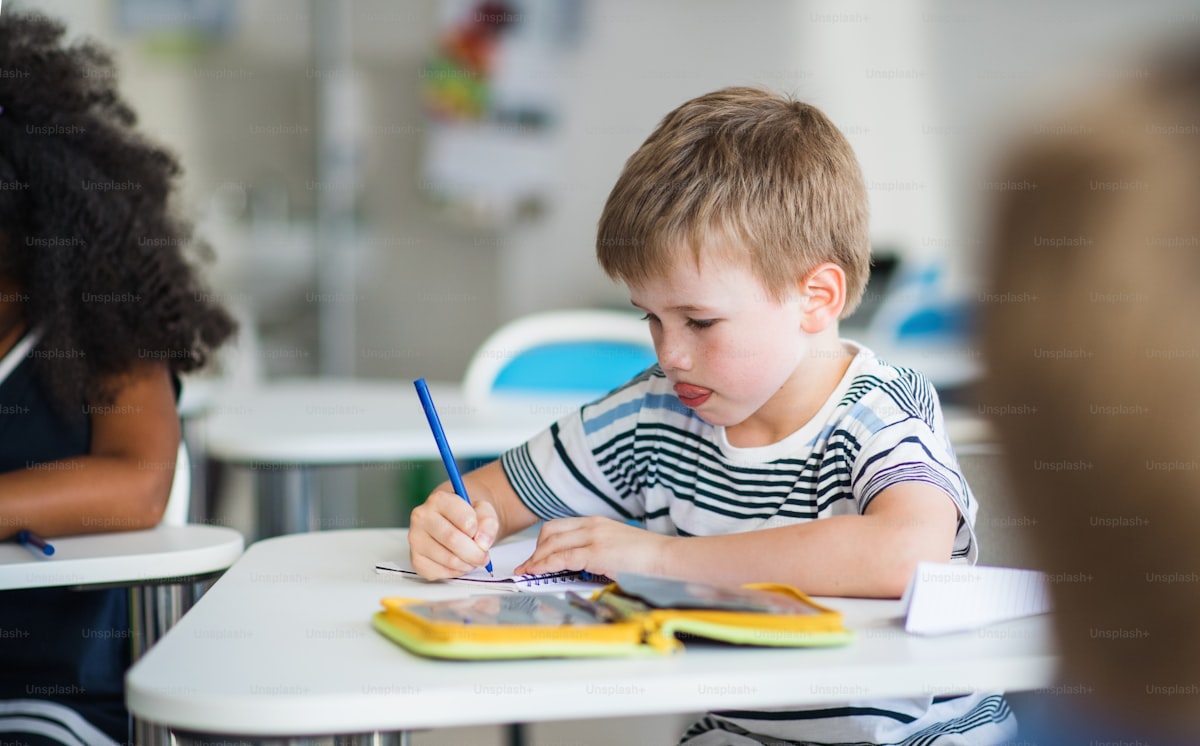
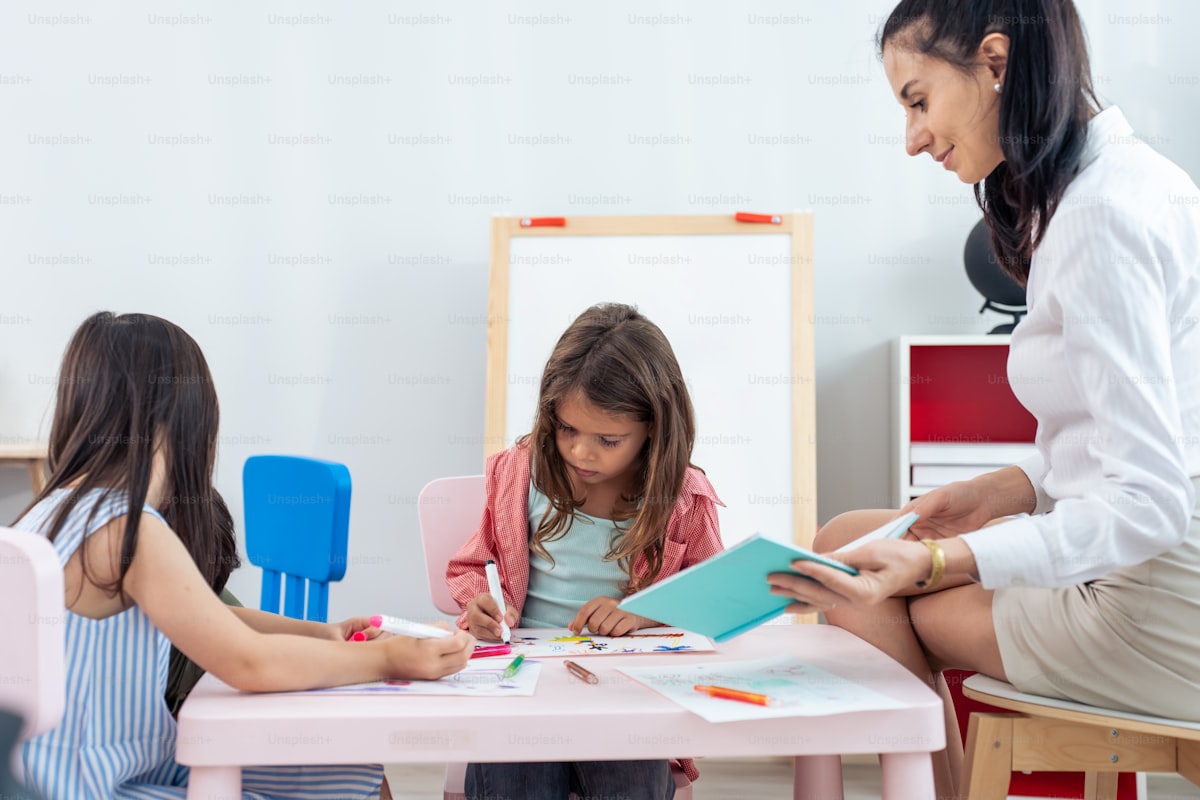
A young child carefully writing letters by hand in a notebook at a wooden desk
Here is a question worth sitting with: if AI can type anything faster than any human ever could, why should your child still learn to write by hand?
The answer, it turns out, has nothing to do with typing speed. Handwriting and brain development are linked in ways that no keyboard can replicate. In 2024 and 2025, a wave of new research confirmed what many educators had long suspected — writing by hand activates the brain in ways that produce deeper learning, stronger memory, and more sophisticated language development than typing. At the same time, schools across the United States began reintroducing cursive writing instruction after years of treating it as obsolete.
If you are homeschooling, this science matters. Understanding why handwriting still matters in the age of AI is not nostalgia — it is evidence-based teaching. And the good news is that building handwriting skills at home does not require fancy curriculum. It requires a pencil, paper, and a framework for consistent practice at every grade level.
The Science Behind Handwriting and Brain Development
A colorful illustration of an active brain with highlighted regions representing motor cortex, memory, and language areas
When a child picks up a pencil and forms a letter, the brain lights up in a way that typing simply does not trigger. A landmark 2024 study published in Frontiers in Psychology measured brain connectivity in college students who either wrote notes by hand or typed them. The handwriting group showed significantly greater neural connectivity across multiple brain regions — connections that are directly associated with learning and memory consolidation.
This is not an isolated finding. The research identifies specific brain regions activated during handwriting that operate differently — and more robustly — during typing.
Forming each letter requires precise, practiced motor movements. The motor cortex, which governs fine motor control, is deeply engaged during handwriting in a way that pressing uniform keys is not. This motor engagement creates a physical "anchor" for the letter or word being learned.
handwritingbrain developmenthomeschool tipsparent guideai educationwriting practice
Visual processing areas. As children write, they visually monitor the shape they are producing — comparing it to their internal model of what the letter should look like. This active visual-motor feedback loop reinforces letter recognition from multiple angles simultaneously.
Memory and hippocampal networks. The slower pace of handwriting forces the brain to process and prioritize information in real time. This cognitive effort — sometimes called "desirable difficulty" — strengthens the encoding of information into long-term memory.
Language regions. Writing by hand engages Broca's area and adjacent language processing regions more deeply than typing. This is why children who write stories and sentences by hand often develop richer vocabulary and more varied sentence structure over time.
Researchers call the skill underlying all of this graphomotor ability — the capacity to translate mental representations of letters into controlled physical movements. The act of drawing each letter, rather than simply pressing a key, builds a unique neural pathway that connects the shape, sound, and meaning of written language in a way that typing cannot replicate.
As NPR reported in 2024, these findings have prompted a significant policy shift. States including California, North Carolina, Ohio, and Louisiana have passed legislation requiring handwriting and cursive instruction to be reintroduced in public schools — reversing decisions made over the previous decade to phase writing instruction out in favor of keyboard skills. Educators who pushed back against those earlier decisions are finding their position confirmed by neuroscience.
Handwriting vs. Typing: What Research Tells Us
The debate between handwriting and typing for learning is not new, but the evidence is now more robust than ever — and it leans decisively in one direction for developing learners.
Scientific American summarized research showing that students who take handwritten notes outperform their typing peers on assessments of conceptual understanding. One detail stands out: students who hand-wrote notes were more likely to earn A grades (9.5%) compared to students who typed notes (6%). The gap is not dramatic, but it is consistent across subjects and grade levels — and it grows when the material requires deeper processing rather than simple recall.
A 2025 study published in ScienceDirect examined five- and six-year-old children learning to identify and write letters. Children who received handwriting instruction significantly outperformed their peers who learned through typing on three key measures: letter recognition, word writing accuracy, and decoding ability. For young learners especially, the physical act of forming a letter appears to be inseparable from learning what that letter is.
In the same year, a study in Nature Scientific Reports found that handwriting practice was more effective than typing for learning to spell new words. Students who wrote words by hand retained correct spellings at a higher rate after one week and after one month. The researchers attributed this to the same mechanism: slower, effortful production requires the brain to hold the word's structure in working memory for longer, which strengthens the encoded representation.
The underlying principle is sometimes called "slower is better" in learning research. When children type, they can transcribe words at close to the speed of thought — which means they often do not have to think deeply about what they are writing. When children write by hand, the necessary slowdown becomes a cognitive advantage. Every sentence requires active decision-making about what is worth writing, and that act of selection is itself a form of learning.
This is why handwriting practice is not just about penmanship. It is about giving the learning brain the time it needs to do its best work.
Why Paper Beats Screens for Young Learners
A child reading a physical book alongside a tablet, with the book shown in focus and the tablet slightly blurred
The handwriting research connects to a broader finding about how children learn from physical versus digital materials. A meta-analysis of 49 studies — covering readers of all ages across multiple countries — found that reading comprehension is consistently higher when reading from paper than from screens. The effect is found across all age groups and becomes more pronounced for informational texts, which make up the bulk of academic reading.
Researchers describe this through what they call the Shallowing Hypothesis: when people read from screens, the brain tends to engage more shallowly with the text. Digital reading is associated with faster scanning, less re-reading, and lower recall of specific details. Physical reading, by contrast, tends to produce slower, more careful engagement.
Several mechanisms appear to drive this difference.
Spatial cues. When children read a physical book or worksheet, they develop spatial memory for where information appeared on the page — how far through the book, which corner of the page, what was written above or below. These spatial anchors help the brain organize and retrieve information. Scrolling through a screen strips away nearly all spatial context, leaving information in an undifferentiated stream.
Tactile engagement. The physical sensation of holding a book, turning pages, or gripping a pencil provides sensory information that the brain incorporates into the memory trace. This multi-sensory engagement creates richer, more retrievable memories than a single visual channel on a screen.
Absence of distraction. A worksheet or book does not send notifications. It does not scroll sideways to reveal new content. It does not suggest other things to look at. The attentional demands of screens — even educational screens — compete with the focused processing that deep learning requires.
None of this means that digital tools have no place in a child's education. AI-powered platforms like Khan Academy, Khanmigo, and Google Gemini for Education offer genuine advantages: adaptive difficulty, immediate feedback, and engaging formats that introduce new concepts effectively. The problem arises when screens replace paper entirely, eliminating the deeper processing that physical practice provides.
The most effective model is an integration — a digital-to-paper learning loop where digital tools teach and introduce concepts, and paper practice consolidates and deepens them. This combination is more powerful than either approach alone, and it is the model that the research supports most strongly.
How to Build Handwriting Skills at Home
The following grade-by-grade guide gives you specific, practical approaches to building handwriting skills at each stage of your child's development. Each level builds on the previous one, moving from foundational motor skills to sophisticated written expression.
Pre-K and Kindergarten (Ages 4–6): Building the Foundation
At this stage, the goal is not neat handwriting — it is developing the fine motor control and letter familiarity that make later writing possible.
Start with large-muscle activities. Cutting with scissors, finger painting, play-dough manipulation, and building with blocks develop the hand strength and coordination that fine motor writing requires. Do not rush to pencil work before these foundations are established.
Use wide-tip crayons and chunky pencils. Young children's hands are not yet ready for thin pencils. Fat crayons and kindergarten-sized pencils make it easier to develop a functional grip without strain.
Trace letters with multiple materials. Before pencil and paper, have children trace letters in sand, salt, or flour in a shallow tray. Writing letters with fingers in shaving cream on a table, or in the air with exaggerated movements, builds the motor memory for letter shapes in a low-stakes way.
Introduce dotted-line tracing worksheets. Once children can hold a writing tool comfortably, dotted-line tracing gives them a guide without requiring them to generate the letter shape independently. Our kindergarten English worksheets include letter formation practice designed for this stage.
Celebrate approximations. A four-year-old's wobbly letter A is an extraordinary achievement. Focus on effort and correct directionality (starting at the top, moving left-to-right) rather than neatness.
Grades 1 and 2 (Ages 6–8): Building Fluency
At this stage, most children are ready to write independent letters and short sentences. The goal is building fluency and automaticity — writing that does not require intense concentration on the physical act itself.
Introduce copywork as a daily habit. Have your child copy short, meaningful sentences — a Bible verse, a poem couplet, a line from a favorite book — by hand each day. Five to ten minutes of focused copywork daily is more effective than a longer weekly session. The meaningful content gives children motivation; the repetition builds motor fluency.
Teach correct pencil grip explicitly. The dynamic tripod grip — pencil resting on the middle finger, controlled by index finger and thumb — is the most efficient for sustained writing. Many children develop awkward grips if not corrected early. Correct grip early; it is much harder to fix in later grades.
Start a simple daily journal. A one-sentence journal entry every morning ("Today I feel ___" or "Yesterday I ___") builds handwriting practice into a meaningful, low-pressure routine. This habit also develops narrative thinking and self-expression.
Use lined paper with appropriate spacing. Wide-ruled paper gives children room to form letters correctly without cramping. As fluency improves, gradually transition to narrower lines. Our first-grade addition and subtraction guide illustrates how paper-based practice at this stage reinforces math learning alongside writing development.
Grades 3 through 5 (Ages 8–11): Building Depth
By third grade, handwriting should begin to become automatic — a tool for thinking rather than an object of attention itself. This is the stage when handwriting becomes integral to subject-area learning.
Introduce note-taking from read-alouds. Read a paragraph aloud and have your child write down two or three key ideas by hand. This teaches active listening, prioritization, and note organization — all transferable academic skills.
Begin cursive instruction. Research on handwriting and brain development shows cursive has specific advantages: it requires the pen to stay on the page for entire words, building flow and rhythm, and it produces higher-quality letter spacing in many children. Whether you use a traditional cursive program or a simplified "print-to-cursive" approach, introducing connected writing in grades 3 or 4 gives children more options as they develop their writing identity.
Use handwritten summaries after reading. After any reading session — whether from a history spine, science text, or chapter book — have your child write a three-to-five sentence summary by hand. This consolidates comprehension and creates a lasting record of what was learned.
Pair digital math practice with paper worksheets. If your child uses an adaptive math platform, reinforce each new concept with a short paper worksheet the same day. The shift from screen to pencil-and-paper is not redundant — it is consolidation. Browse our math worksheets for grade-level practice that aligns with common curriculum sequences.
Grades 6 through 8 (Ages 11–14): Building Sophistication
In middle school, handwriting skills should support increasingly complex cognitive work. The goal at this stage is using handwriting as a tool for thinking — not just transcription.
Draft essays and long-form writing by hand first. Before typing a formal essay, have your child draft it by hand on paper. The slower pace encourages more deliberate word choice and sentence construction. The finished typed version is almost always stronger when it started as a handwritten draft.
Use hand-drawn mind maps for brainstorming. Before starting any research project or essay, create a mind map by hand with the central topic in the middle and related ideas radiating outward. The physical act of drawing and arranging ideas spatially helps students see connections and gaps before they start writing.
Maintain a learning journal. A dedicated journal for each subject — where students record new vocabulary, key dates, important formulas, and personal reflections — creates a handwritten reference that is more memorable than digital notes. The act of writing by hand while deciding what to include is a powerful review and consolidation activity.
Practice annotation. Teach students to read with a pencil — underlining key passages, writing brief margin notes, circling unfamiliar words, and adding question marks where they are confused. This active reading strategy produces measurably higher comprehension and is one of the best-studied academic reading techniques available.
The Digital-to-Paper Learning Loop
The evidence does not argue for abandoning digital learning tools — it argues for combining them intelligently with paper-based practice. For homeschool families, this integration is both practical and powerful.
Think of it as a two-step learning cycle.
Step 1: Digital instruction. AI-powered platforms excel at introducing new concepts. Khan Academy's adaptive math curriculum adjusts to your child's pace in real time. Google Gemini for Education's Guided Learning mode walks students through research like a patient tutor. Duolingo builds language patterns through spaced repetition. These tools are genuinely effective at getting new information into your child's working memory — especially for concept introduction and immediate practice with feedback.
Step 2: Paper consolidation. After the digital session, a short paper worksheet or handwriting activity converts working memory into long-term retention. The shift from screen to paper — from typing to writing — is not redundant. It is a second encoding, through a different channel, that significantly increases the likelihood that the learning sticks.
A practical weekly rhythm might look like this: 20 minutes of adaptive digital practice followed by 15 minutes of paper worksheet practice covering the same concept. This loop takes 35 minutes and produces meaningfully stronger retention than 35 minutes of screen time alone. For more guidance on integrating AI tools into your homeschool routine, our best free AI tools for homeschooling guide covers the specific platforms most valuable for K-8 learners.
The loop works for every subject. In math, Khan Academy introduces the concept; a paper worksheet drills the procedure. In language arts, an AI reading assistant builds vocabulary; a handwritten sentence-writing activity puts those words into use. In science, digital videos explain concepts; a hand-drawn diagram or labeled illustration consolidates the visual understanding. For families thinking carefully about how AI tools fit into this picture, our AI education safety guide provides a practical framework for evaluating any platform your child might use.
The More AI Advances, the More Handwriting Matters
There is an irony at the heart of modern education: the more AI tools we adopt, the more important offline, paper-based, handwriting-intensive practice becomes.
AI handles synthesis, speed, and information retrieval better than any human ever will. What AI cannot do is build the neural pathways that come from a child's hand forming letters on paper. It cannot replicate the spatial memory created by writing in a physical notebook. It cannot produce the deep encoding that comes from the productive struggle of handwriting at the speed of thought.
Handwriting is not a relic of the pre-digital era. It is a neurological tool — one that builds reading skills, strengthens memory, develops fine motor control, and trains the brain to process information at the depth required for genuine understanding. In a world where AI is doing more and more of the surface-level cognitive work, the skills built through handwriting practice become more valuable, not less.
The children who thrive in this environment will be the ones who can think deeply, write clearly, and work with sustained focus on paper — alongside, not instead of, their digital fluency.
Ready to build the paper side of your child's learning loop? Browse our free worksheets for K-8 math and English — designed to complement any digital curriculum and give your child the paper practice that reinforces everything they learn on screen. Our English worksheets are particularly well-suited for building handwriting fluency alongside reading and writing skills at every grade level.