How to Help a Child with Math Anxiety at Home: A Parent's Complete Guide
Oh My Homeschool·
A parent sitting with their child at a kitchen table, calmly helping them work through math problems
Your child slumps in the chair the moment math homework appears. Their face tightens. "I can't do this," they say — before they've even read the first problem. Sound familiar?
If so, your child may be experiencing math anxiety — a very real, very common phenomenon that affects up to 50% of elementary-age children in the U.S. The good news is that math anxiety is not a learning disability, and it is not permanent. With the right approach at home, you can help your child break the cycle of dread and build genuine confidence in math.
This guide explains what math anxiety is, how to recognize it, and — most importantly — gives you seven concrete strategies you can start using today.
What Is Math Anxiety?
Math anxiety is a feeling of tension, worry, or fear that specifically interferes with a person's ability to do math. It is not the same as being "bad at math." In fact, children with math anxiety often have perfectly adequate math ability — but the anxiety itself blocks their thinking.
When a child experiences math anxiety, their brain's threat-detection system (the amygdala) activates, flooding the body with stress hormones. Working memory — the mental workspace needed to hold and manipulate numbers — gets hijacked. The child can't think clearly, makes careless errors they wouldn't otherwise make, and comes to believe they are fundamentally incapable. Each negative experience reinforces the belief, and the cycle deepens.
This is why math anxiety doesn't solve itself. Without intervention, a child who avoids math to escape anxiety will fall further behind, which generates more anxiety. Breaking that cycle requires a deliberate change in how math is experienced at home.
Signs Your Child Has Math Anxiety
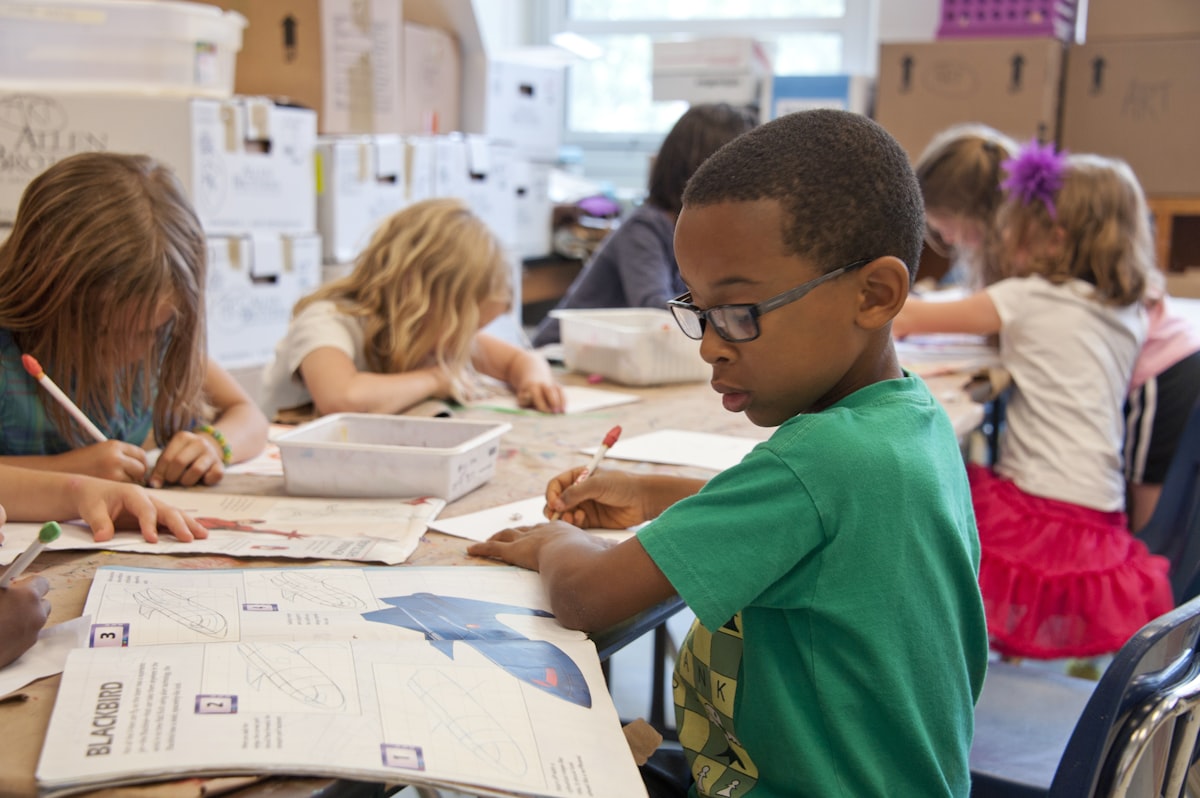
A child looking down at a math worksheet with a worried expression
math anxietyelementary mathhomeschool mathadditionmultiplicationword problemsparent tips
Math anxiety looks different in different children, but there are common patterns to watch for.
Emotional signs:
Crying, outbursts, or meltdowns around math homework
Saying "I'm stupid" or "I'll never get this" specifically about math
Extreme frustration that seems disproportionate to the difficulty of the task
Reluctance or refusal to attempt math problems at all
Physical signs:
Stomachaches or headaches that appear on math homework days
Fidgeting, avoiding eye contact, or shutting down during math
Rushing through problems to "get it over with," resulting in careless errors
Behavioral signs:
Performing much better on take-home assignments than on in-class tests
"Forgetting" how to do a concept they previously understood
Seeking constant reassurance ("Is this right? Is this right?") before finishing a single step
One important distinction: if your child struggles only with math but shows no signs of general anxiety, math anxiety is the more likely explanation. If anxiety appears across many domains, a broader evaluation may be helpful.
The Parent Connection: How Your Attitude Shapes Your Child's Experience
A parent reflecting at a table with a cup of coffee, notebooks open
Here is a finding that often surprises parents: a parent's own math anxiety is one of the strongest predictors of math anxiety in their child. A 2025 study following nearly 130 children from age three to eight found that parental math anxiety significantly predicted children's math outcomes — even after controlling for parental education.
This does not mean you've "caused" your child's anxiety. But it does mean that the way you talk about math in front of your child matters enormously.
What helps:
Avoid saying "I was never good at math either" — even if it's meant to be comforting, it signals that math difficulty is inherited and fixed
Replace "This is hard" with "This is tricky — let's figure it out together"
When you make a math mistake in front of your child, say "Oops, let me check that" rather than "See, I'm terrible at math"
Frame math as a skill that grows with practice, not a talent you either have or don't
Research on growth mindset — the belief that abilities develop through effort — consistently shows that children who hear this message from their parents are more resilient when they encounter difficulty. They interpret struggle as a signal to try harder, not as proof of inadequacy.
7 Proven Strategies to Help a Child with Math Anxiety at Home
1. Make Math Low-Stakes Before Anything Else
The single most important thing you can do is reduce the pressure surrounding math. A child in a state of anxiety cannot learn effectively. Before you try to teach anything, you need to create an environment where getting things wrong is safe.
Concretely: stop correcting every error immediately. When a child makes a mistake, resist the urge to jump in. Ask "Does that answer make sense?" and let them check their own work. Separating the process of working from the moment of evaluation reduces the sense that every step is being judged.
Work alongside your child rather than watching over their shoulder. Saying "I'll do this puzzle while you work on your homework" changes the dynamic from surveillance to companionship.
2. Start With What They Can Already Do
Anxiety builds when children feel they are constantly working at the edge of their ability. Begin each practice session with problems that are easy for your child — problems they can solve quickly and correctly. This activates their math brain in a positive state before the harder work begins.
If your child is in third grade but anxious about multiplication, start with a few addition problems they can zip through. Success builds momentum. The same principle applies to worksheets: choose materials calibrated to your child's current confidence level, not their grade level. A child who feels competent doing Grade 2 addition will make faster real-world progress than a child struggling and shutting down on Grade 3 multiplication. You can browse our printable addition worksheets and subtraction worksheets to find the right starting point.
3. Use Hands-On Materials Instead of Abstract Symbols
Many children who struggle with written math can reason quite well when math is made physical. Before asking a child to solve 7 − 3 = ?, have them hold seven pennies and take away three. Before working on multiplication, use egg cartons or small cups to physically build "three groups of four."
This is not "babyish" — it is how mathematical understanding actually develops. Research consistently supports the sequence: concrete → pictorial → abstract. Children who jump straight to symbols before they have physical experience often memorize without understanding, which collapses under pressure.
For word problems specifically, drawing a quick sketch of what the problem describes is a powerful bridge between language and math. Our word problem worksheets are designed with space for students to draw and show their thinking.
4. Play Math Games, Not Math Drills
Timed drills are one of the most reliable ways to increase math anxiety. The pressure of a ticking clock activates the same stress response as a test, making it nearly impossible for anxious children to access what they actually know.
Games produce the opposite effect. When a child is playing a math game, they are doing the same mental work as a drill — comparing numbers, recalling addition facts, calculating quickly — but in a context where mistakes are just part of the game, not a verdict on their ability.
Children laughing and playing a board game involving counting and numbers
Low-prep math games for home:
War with a twist: Use a regular card deck; each player flips two cards and adds (or multiplies) them. Higher sum wins both cards.
Number Hunt: Look for numbers in the environment (on cereal boxes, license plates, receipts) and ask quick math questions about them
Dice races: Roll two dice and add them as fast as possible, aiming to beat your own record — not competing against someone else
Skip-count songs: Singing multiplication facts removes the performance pressure entirely
For structured practice that doesn't feel like a test, try multiplication worksheets that use visual grouping models rather than bare fact drills.
5. Talk About Math Differently
The language we use about math shapes how children think about their own ability. Several specific language shifts make a significant difference.
Replace ability labels with process descriptions:
Instead of: "You're so smart at math!"
Try: "You worked really hard on that — look how you figured it out step by step."
Praising intelligence ("you're smart") makes children afraid to attempt hard problems, because failing would mean they're not smart after all. Praising effort and strategy ("you worked carefully," "you tried a different approach") teaches children that their actions lead to results.
Name the anxiety without judgment:
"I notice math homework feels really hard right now. That's okay — what's one small piece we could figure out together?"
Naming the feeling reduces its intensity. Children who can say "I'm feeling math-anxious right now" have more cognitive distance from the feeling than children who can only say "I hate math."
6. Keep Math Sessions Short and Pressure-Free
For a child with math anxiety, 10 focused minutes of positive math experience is worth more than 45 minutes of grinding through problems in distress. Quality of experience matters far more than quantity of problems completed.
Practical guidelines:
Set a timer for 15–20 minutes max during high-anxiety periods
End each session on a success, even if it means switching to easier problems at the end
If your child becomes dysregulated (crying, shutting down), stop. Continuing through a meltdown does not produce learning — it deepens the negative association
Consistency over time matters more than session length. Five calm 15-minute sessions per week builds more skill and more confidence than one painful two-hour session.
7. Connect Math to Real Life
Children who see math as a disconnected school subject are more likely to feel anxious about it. Children who understand that math describes real things — quantities, time, money, distances, patterns — have more intuitive anchors to attach new learning to.
Build incidental math into daily routines without turning it into homework:
Let your child pay at a store and calculate the change
Ask them to double a recipe with you
Have them figure out how many more minutes until their favorite show starts
Point out skip-counting patterns on a clock face or measuring tape
These low-stakes encounters with real math reinforce that math is something people use, not just something schools test. For a child anxious about fractions, cutting a pizza or dividing snacks into equal groups makes abstract notation suddenly concrete. You'll find that our counting worksheets connect directly to these real-world experiences.
When to Consider Additional Support
Most cases of math anxiety respond well to the strategies above, especially when started early. However, some situations warrant additional support.
Talk to your child's teacher if:
The anxiety significantly interferes with completing classwork, not just homework
Your child's math skills are falling meaningfully behind grade expectations
The anxiety is accompanied by other signs of generalized anxiety (sleep problems, school refusal, separation anxiety)
Consider a math tutor if:
There are specific skill gaps that need targeted catch-up work
Your child responds better to working with a neutral third party than with you
You're approaching your own limits in teaching the current content
One-on-one tutoring has been specifically shown in research to reduce math anxiety, partly because the individual attention allows the pace and difficulty to be adjusted in real time.
Building Confidence Is the Work
A child smiling and giving a thumbs up after finishing a math worksheet
The most common mistake parents make with math-anxious children is focusing exclusively on the math skills and forgetting that confidence is the prerequisite, not the reward. A child who feels safe, capable, and calm learns math far faster than a child who is anxious, regardless of how many problems they complete per day.
Your role at home is not to be a math teacher. It is to be a safe base — the person who communicates, through patience and structure, that math is learnable, that mistakes are expected, and that your child's worth is not measured in correct answers.
When children internalize that belief, the math skills follow. If you're looking for worksheets designed to build confidence with appropriately leveled practice, start with our easy addition worksheets for Grade 1 and work your way up at your child's pace.