First Grade Math Word Problems: Strategies, Tips, and Free Worksheets
Oh My Homeschool·
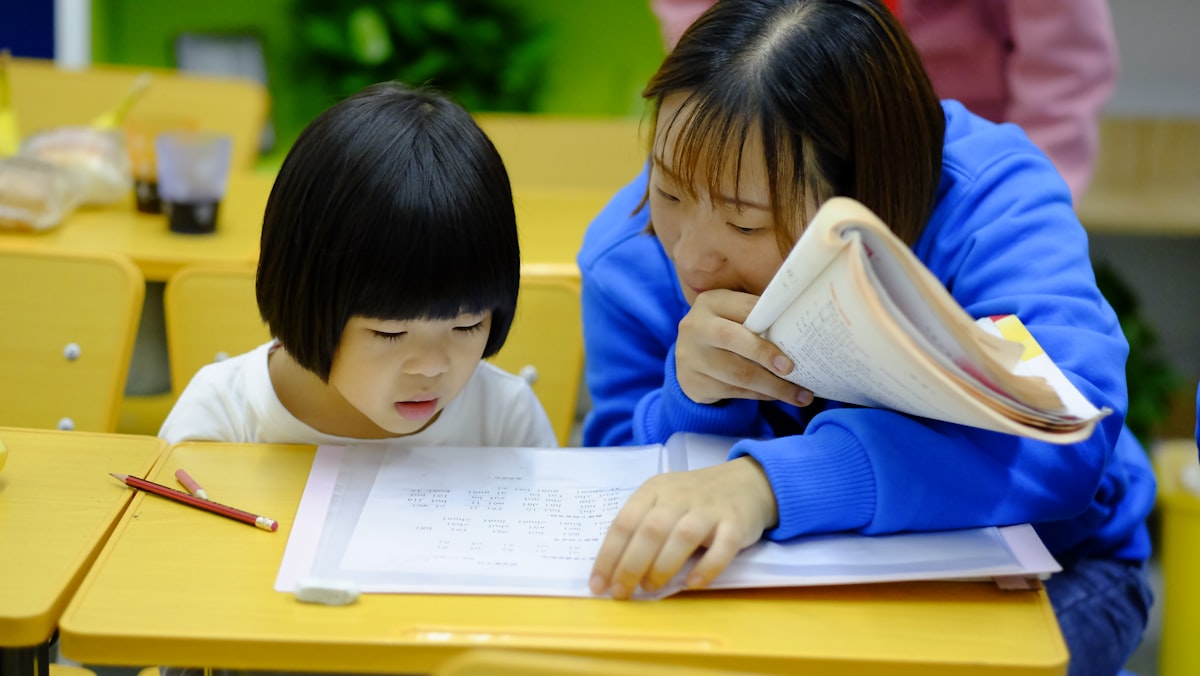
A child focused on solving math problems at a desk
Your first grader can add 7 + 5 without hesitation, but when you ask "Sarah had 7 stickers and her friend gave her 5 more — how many does she have now?" they freeze. Sound familiar? You're not alone. Math word problems are one of the biggest challenges first graders face, not because the math is harder, but because word problems demand a completely different set of skills: reading comprehension, identifying what's being asked, choosing the right operation, and then computing the answer. The good news is that with the right strategies and consistent practice, your child can become a confident word problem solver. This guide breaks down exactly how to make that happen.
Why Word Problems Matter in First Grade
Word problems aren't just another type of math exercise — they're the bridge between abstract numbers and real-world thinking. When a child solves 8 - 3 on a worksheet, they're practicing computation. When they solve "You had 8 cookies and ate 3 — how many are left?" they're learning to apply math to life.
What first graders need to master:
Solve addition word problems within 20
Solve subtraction word problems within 20
Determine whether a problem requires addition or subtraction
Handle problems where the unknown is in different positions (result unknown, change unknown, start unknown)
Explain their reasoning using words, drawings, or equations
Most educational standards emphasize that first graders should work with three main word problem types: result unknown ("Maria has 6 apples and picks 4 more. How many does she have?"), change unknown ("Tom has 9 marbles. Some rolled away. Now he has 5. How many rolled away?"), and start unknown ("Some birds were on a branch. 3 more landed. Now there are 10. How many were there at first?"). Each type requires a different level of thinking, and children need practice with all three.
The 4-Step Strategy for Solving Word Problems
first gradeword problemsadditionsubtractionhomeschool mathmath worksheetsproblem solving
A parent helping a child understand a math concept at home
Teaching your child a consistent, repeatable process is the single most effective thing you can do. When children have a clear framework to follow, word problems become manageable instead of overwhelming. Here's a simple 4-step approach that works for first graders.
Step 1: Read and Understand
Before any math happens, your child needs to understand the story. Read the problem aloud together — twice. The first reading is for the overall story. The second reading is for the specific question being asked.
Questions to ask:
"What is this story about?"
"Who is in the story?"
"What happened first? What happened next?"
"What is the question asking us to find?"
Many children rush past this step, jumping straight to the numbers. Slow them down. If they can retell the story in their own words, they understand it. If they can't, read it again.
Step 2: Identify the Key Information
Help your child find the important numbers and the action in the problem. First graders can physically circle or underline the numbers and the question.
Teach them to look for action words:
Joining actions (addition): gave, added, found, bought, picked up, more came
Separating actions (subtraction): ate, lost, gave away, broke, flew away, left
For example: "Jake had 12 toy cars. He gave 4 to his brother. How many does Jake have left?" The numbers are 12 and 4, the action is "gave" (separating), and the question asks "how many left."
Step 3: Choose a Strategy and Solve
Once your child understands the problem and has identified the key information, they need to solve it. First graders benefit enormously from using visual strategies before writing equations.
Visual strategies that work:
Draw a picture: Sketch circles, tally marks, or simple objects to represent the numbers
Use a number line: Start at one number and hop forward (addition) or backward (subtraction)
Act it out: Use physical objects (blocks, coins, snack pieces) to model the problem
Write an equation: Translate the story into numbers (12 - 4 = ?)
Encourage your child to use whichever strategy feels most natural. Over time, they'll move from drawing every problem to solving mentally, but there's no need to rush that transition.
Step 4: Check the Answer
This step is often skipped but incredibly valuable. Teach your child to ask: "Does my answer make sense?" If Jake had 12 cars and gave some away, the answer should be less than 12. If the answer is 16, something went wrong. This kind of number sense reasoning prevents careless errors and builds mathematical thinking.
Common Word Problem Types and How to Practice Each
A child engaged in a hands-on learning activity
Not all word problems are created equal. Understanding the different types helps you identify where your child needs more practice.
Result Unknown Problems (Easiest)
These are the most straightforward word problems. The child knows the starting amount and the change, and needs to find the result.
Addition example: "Emma has 8 crayons. Her mom gives her 6 more crayons. How many crayons does Emma have now?"
Subtraction example: "There were 15 birds on a fence. 7 birds flew away. How many birds are still on the fence?"
Practice tip: Start here. Build confidence with result unknown problems before moving to harder types. Use numbers within 10 first, then progress to within 20.
Change Unknown Problems (Medium)
These problems require more thinking because the child must figure out what changed. The starting amount and the final amount are given, but the change is missing.
Addition example: "Lucas had 5 baseball cards. His uncle gave him some more. Now Lucas has 13 baseball cards. How many did his uncle give him?"
Subtraction example: "Mia had 14 stickers. She gave some to her friend. Now she has 9 stickers. How many did she give away?"
Practice tip: These problems connect beautifully to missing addend work. If your child has practiced "5 + ? = 13," they already have the skills — they just need to recognize the same pattern inside a story.
Start Unknown Problems (Hardest)
These are the most challenging because the unknown is at the beginning of the story. Children must think backward, which requires flexible reasoning.
Addition example: "Some children were playing in the park. 4 more children joined them. Now there are 11 children. How many were playing at first?"
Subtraction example: "There were some apples in a basket. After eating 3, there are 9 left. How many apples were in the basket at first?"
Practice tip: Use manipulatives heavily with these problems. Acting out the story with physical objects makes the backward thinking much easier. "Let's figure out what number we started with — we know 4 joined and ended up with 11."
Comparison Problems
Comparison problems ask children to find the difference between two amounts or determine who has more or fewer.
Example: "Olivia picked 12 flowers. Noah picked 8 flowers. How many more flowers did Olivia pick than Noah?"
Practice tip: These are tricky because the word "more" appears even though the operation is subtraction. Use a visual comparison — line up 12 objects next to 8 objects and count the difference. This makes the concept concrete.
Five Practical Tips for Daily Practice
A child reading and thinking while studying at home
Consistent, short practice sessions produce far better results than occasional long sessions. Here's how to make word problem practice a natural part of your daily routine.
Tip 1: Make It Real
The most powerful word problems come from your child's actual life. Instead of reading problems from a book, create them together:
"You have 6 grapes on your plate. I'm adding 5 more. How many grapes do you have now?"
"We need 12 plates for the party. We've set out 8. How many more do we need?"
"You had 10 minutes of screen time. You've used 4 minutes. How many minutes are left?"
Real-world problems feel relevant and motivating. They also naturally include the context clues that help children understand what's happening.
Tip 2: Start With Telling, Not Reading
Many first graders struggle with word problems simply because reading is still developing. Separate the math challenge from the reading challenge by telling problems orally first. Once your child can solve spoken word problems confidently, gradually transition to reading them on paper.
Tip 3: Use the "Numberless" Approach
Before showing numbers, present the story without them: "Some ducks were swimming in a pond. More ducks joined them. How could we figure out the total?" Discuss what operation makes sense before any computation happens. This builds the critical skill of choosing the right operation.
Then add the numbers: "5 ducks were swimming. 3 more joined them." Now the child already knows to add — they just need to compute 5 + 3.
Tip 4: Practice the Language of Math
First graders need explicit teaching about math vocabulary in word problems. Create a simple reference chart together:
Words that usually mean add: altogether, in all, total, combined, both, more, join
Words that usually mean subtract: left, remaining, fewer, difference, take away, how many more
Post this chart near your study area and refer to it during practice. Over time, recognizing these signal words becomes automatic.
Tip 5: Celebrate the Process, Not Just the Answer
When your child solves a word problem, ask "How did you figure that out?" rather than simply saying "Correct!" Praising the strategy encourages mathematical thinking. If the answer is wrong but the strategy was sound, acknowledge the good thinking and work through the error together. Children who are praised for their process develop resilience and a growth mindset toward math.
Recommended Practice Progression
Building word problem skills works best when you follow a deliberate progression from simple to complex. Here's a weekly framework you can adapt:
Week 1-2: Result Unknown, Numbers Within 10
Focus exclusively on the easiest problem type with small numbers. Use physical objects for every problem. The goal is to build the habit of reading carefully and choosing the right operation.
Week 3-4: Result Unknown, Numbers Within 20
Keep the same problem type but increase the number range. Introduce drawing as a strategy alongside manipulatives. Begin practicing with our first grade addition worksheets that include word problem sections.
Week 5-6: Introduce Change Unknown
Mix change unknown problems with result unknown problems. Use the "5 + ? = 13" format alongside the word problem to help children see the connection. Our first grade subtraction worksheets include missing number problems that build this skill.
Week 7-8: Introduce Start Unknown and Comparison
These are the most challenging types. Continue using manipulatives and drawings. Don't rush — if your child needs more time at any stage, that's perfectly fine.
Ongoing: Mixed Practice
Once all problem types have been introduced, daily practice should include a mix. Our word problem worksheets provide carefully sequenced practice across all types and difficulty levels.
When Your Child Is Struggling
Every child hits rough patches with word problems. Here's how to respond to common struggles without creating math anxiety.
"I don't know what to do" — Go back to Step 1. Reread the problem together. Ask them to tell you the story in their own words. Often the issue is comprehension, not math.
"I don't know if I should add or subtract" — Use the numberless approach. Remove the numbers and discuss what's happening in the story. "Are we putting things together or taking things apart?"
"I keep getting the wrong answer" — Check whether the error is in operation choice or computation. If they chose the right operation but computed incorrectly, that's a different issue than choosing the wrong operation. Address each skill separately.
"Word problems are boring" — Make them personal. Use your child's name, their friends' names, their favorite toys or foods. "If [child's name] had 14 Pokémon cards and traded 6 with [friend's name]..." Personalization dramatically increases engagement.
If your child consistently struggles with word problems despite regular practice, consider whether the underlying addition and subtraction skills are solid. Our guide on first grade addition and subtraction strategies covers the foundational skills that word problems build upon.
CCSS.MATH.CONTENT.1.OA.A.1 — Use addition and subtraction within 20 to solve word problems involving situations of adding to, taking from, putting together, taking apart, and comparing, with unknowns in all positions.
CCSS.MATH.CONTENT.1.OA.A.2 — Solve word problems that call for addition of three whole numbers whose sum is less than or equal to 20.
CCSS.MATH.CONTENT.1.OA.D.7 — Understand the meaning of the equal sign, and determine if equations involving addition and subtraction are true or false.
CCSS.MATH.CONTENT.1.OA.D.8 — Determine the unknown whole number in an addition or subtraction equation relating three whole numbers.
The four word problem types covered in this guide — result unknown, change unknown, start unknown, and comparison — map directly to the situations described in standard 1.OA.A.1. This standard specifically requires practice with "unknowns in all positions," which is why working through all four problem types is so important rather than focusing only on the easiest result-unknown format.
Connecting Word Problems to Everyday Math
The ultimate goal isn't to solve word problems on paper — it's to use math as a thinking tool in daily life. Help your child see that word problems are everywhere:
Cooking: "The recipe needs 3 cups of flour. We've added 1. How many more?"
Shopping: "This toy costs $12 and you have $8 saved. How much more do you need?"
Time management: "Your show starts in 15 minutes. You've been waiting 7 minutes. How many more minutes?"
Sports and games: "Your team scored 6 points in the first half and 8 in the second. How many total?"
When children experience math as useful rather than abstract, their motivation and retention skyrocket. Every time you turn a daily situation into a mental math moment, you're reinforcing the exact skills that word problems test.
Word problems don't have to be a source of frustration. With a clear strategy, consistent practice, and patience, your first grader can develop the confidence to tackle any math story problem. Start with the 4-step approach, practice daily with real-life scenarios, and use targeted worksheets to build fluency. The problem-solving skills your child develops now will serve them well through every grade that follows.