How to Teach Counting to Preschoolers: A Parent's Guide
Oh My Homeschool·
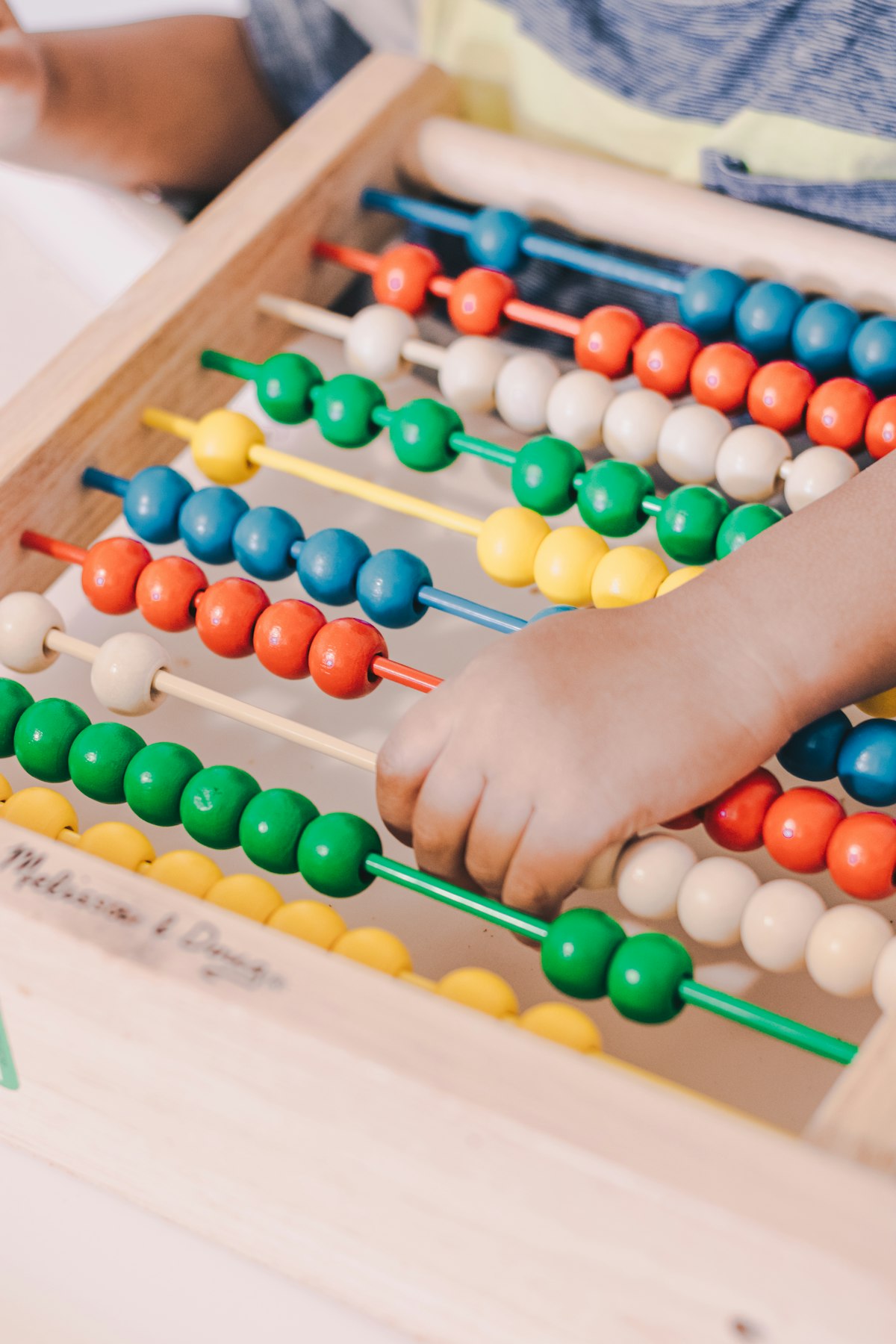
A child learning to count with a colorful wooden abacus
Long before children sit down with worksheets or textbooks, they begin to explore the world of numbers through everyday experiences. Counting the steps as you climb the stairs, sorting socks by color, sharing crackers equally between siblings — these small moments form the building blocks of mathematical thinking. If you're wondering how to teach counting to preschoolers in a way that feels natural and fun, the answer starts with understanding how young children actually learn numbers, and then meeting them exactly where they are.
Why Counting Matters for Preschoolers
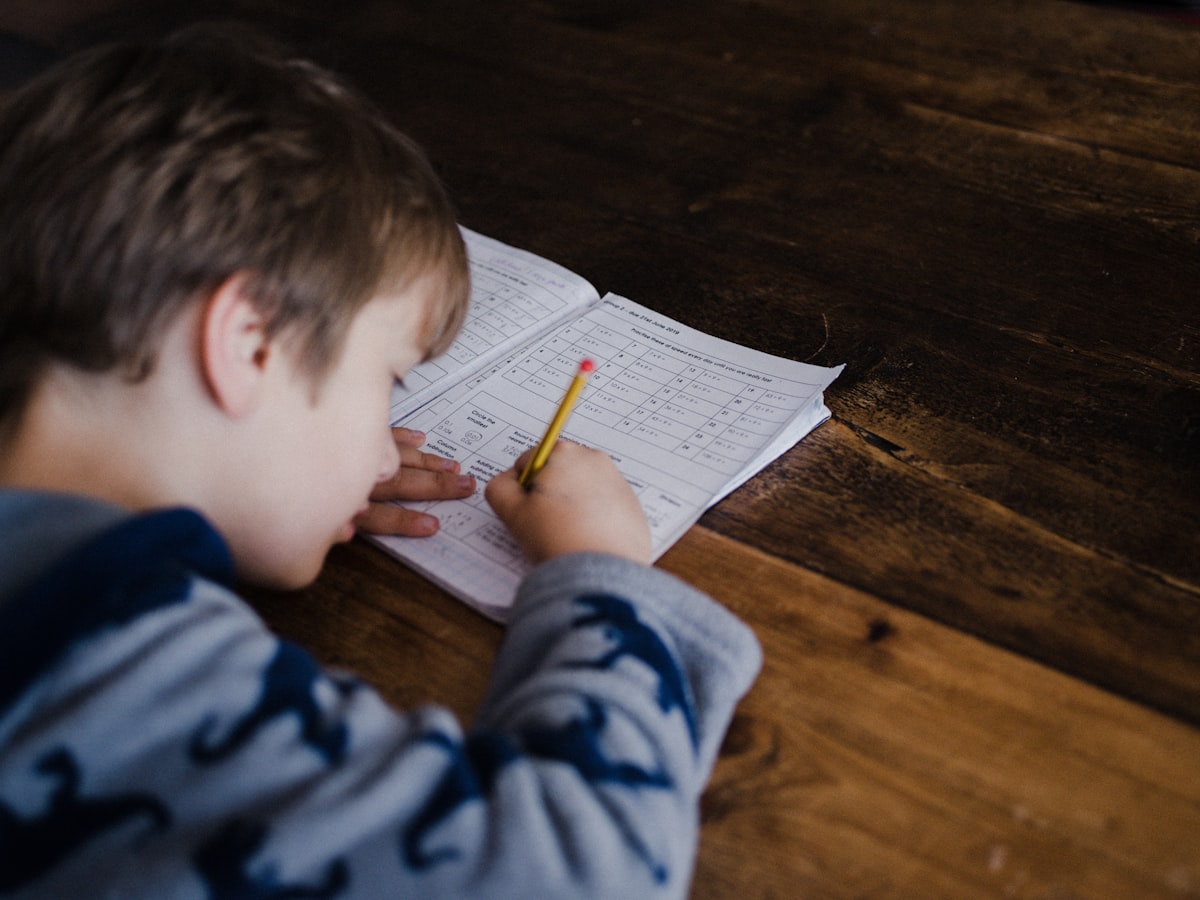
A young boy working on math problems with a pencil
Counting is more than just reciting numbers in order. It's a complex cognitive skill that involves memory, pattern recognition, one-to-one correspondence, and abstract thinking. Research from the National Council of Teachers of Mathematics shows that early number sense is one of the strongest predictors of later academic success — not just in math, but across all subjects.
The Building Blocks of Number Sense
When we talk about teaching counting to preschoolers, we're actually talking about several interconnected skills.
Verbal counting (rote counting) is the ability to recite numbers in sequence: one, two, three, four, five. This is often the first counting skill children develop, sometimes as early as age two.
One-to-one correspondence means touching or pointing to each object exactly once while saying one number for each object. This is harder than it sounds — preschoolers often skip objects or count the same one twice.
Cardinality is understanding that the last number you say when counting a group tells you how many there are in total. When a child counts five blocks and then confidently answers "five" when asked "how many blocks are there?" — that's cardinality in action.
Quantity comparison involves understanding concepts like more, fewer, and the same. A preschooler who can look at two groups of cookies and tell you which plate has more is demonstrating early comparison skills.
Each of these skills builds on the one before it, creating a foundation that will support all future math learning through kindergarten and beyond.
When Are Preschoolers Ready to Count?
Every child develops at their own pace, but here's a general timeline for counting milestones that can help you gauge where your child is and what to work on next.
Ages 2-3: Most children begin rote counting to 5 or 10, though they may skip numbers or get the order mixed up. They start to understand the concept of "one" and "two" as distinct quantities. They might point to objects while counting, though not always accurately.
Ages 3-4: Children typically count to 10 or higher with increasing accuracy. One-to-one correspondence begins to develop — they can touch each object while counting, especially with small groups of 3 to 5 objects. They start to understand cardinality for very small numbers (1 to 3).
Ages 4-5: Most preschoolers can count to 20 or beyond. One-to-one correspondence becomes reliable for groups up to 10. Cardinality is well-established for numbers up to 5 or 10. They begin comparing groups and understanding concepts like "more than" and "less than."
The key is to observe your child and follow their lead. If your three-year-old is fascinated by counting everything in sight, lean into that interest. If your four-year-old isn't interested in numbers yet, focus on making counting fun and pressure-free rather than pushing formal instruction.
Step-by-Step Guide to Teaching Counting
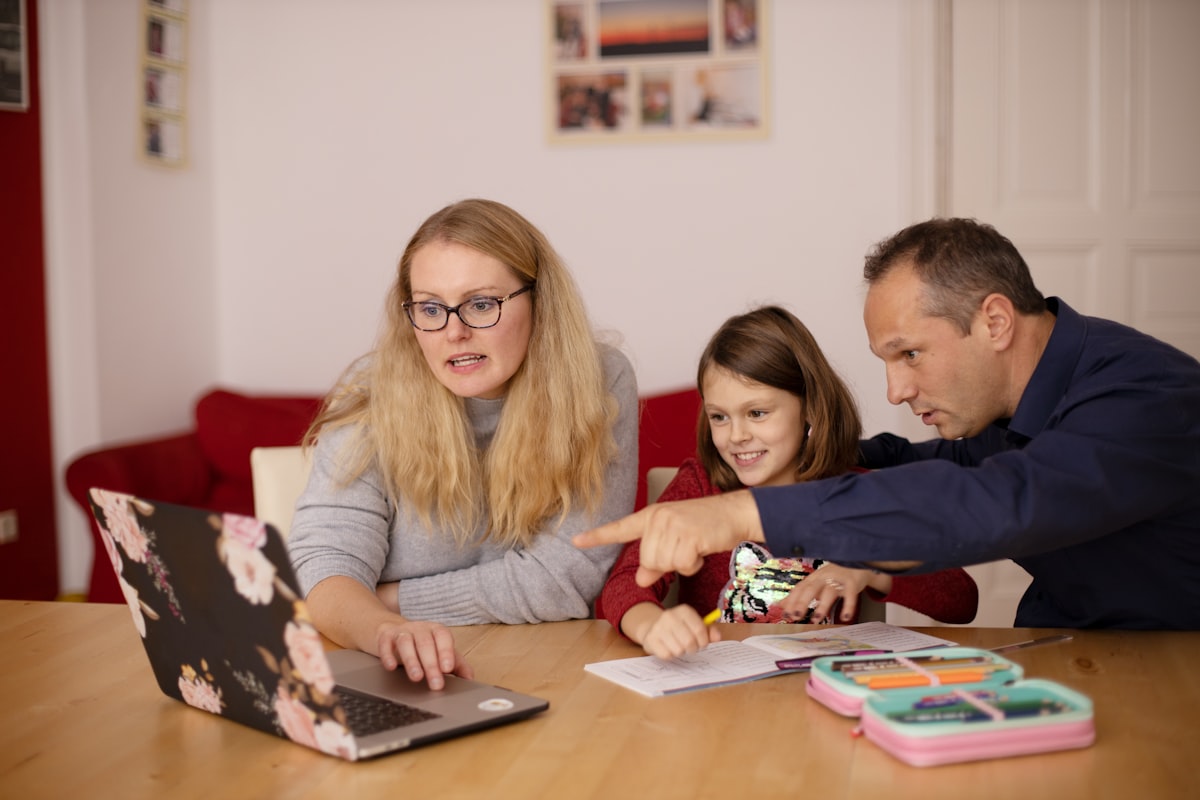
Parents helping their child with learning activities at a desk
The most effective approach to teaching counting to preschoolers follows a natural progression from concrete experiences to more abstract understanding. Here's how to work through each stage.
Stage 1: Rote Counting
Start by simply counting together throughout the day. Count the stairs as you walk up them. Count the pieces of fruit going into a smoothie. Count claps during a song. At this stage, your child doesn't need to understand what the numbers mean — they just need to hear the sequence over and over until it becomes familiar.
Activities for rote counting:
Sing counting songs like "Five Little Monkeys" or "Ten in the Bed"
Count jumps, hops, or spins during active play
Read counting books together at bedtime
Count bites during meals ("That was bite number four!")
Stage 2: One-to-One Correspondence
Once your child can recite numbers in order, it's time to connect those words to actual objects. The goal is for your child to understand that each number word goes with exactly one object.
Activities for one-to-one correspondence:
Line up toy cars and count them together, touching each one as you say the number
Give your child a small group of stickers and have them place one sticker on each finger
Set the table together — one plate for each person, one fork for each plate
Use egg cartons and small objects (pom-poms, dried beans) — place one object in each cup while counting
Important tip: Start with very small groups (2 to 3 objects) and slowly increase. Preschoolers often lose track when groups get larger than 5, and that's completely normal. Accuracy matters more than range at this stage.
Stage 3: Cardinality
This is the "aha moment" — when your child realizes that the last number they counted tells them the total. You can encourage this by always asking "how many?" after counting a group together.
How to develop cardinality:
Count a group of objects, then ask "So how many are there?"
If your child recounts instead of giving the answer, that's okay — they're still working on it
Play games where the total matters: "We need three plates. Let's count and make sure we have three."
Use the phrase "There are five" to model cardinality language
Stage 4: Counting Sets and Comparing
Once cardinality clicks, your child is ready to start comparing groups. This lays the groundwork for understanding addition and subtraction later on.
Activities for comparing:
Put different numbers of crackers on two plates and ask "Which plate has more?"
Build two block towers and compare which is taller (more blocks)
Sort a small collection of toys into two groups and count each group
Play simple board games where players compare who has collected more tokens
Fun Counting Activities for Preschoolers at Home
You don't need special materials to create counting opportunities. The best counting activities for preschoolers use items you already have and fit naturally into your daily routine.
Everyday Counting Opportunities
Turn ordinary moments into counting practice. Count the grapes on your child's plate before they eat them. Count the dogs you see on a walk. Count the steps from the car to the front door. Count the books in the bedtime stack. The more naturally counting fits into your day, the more your child will see numbers as a normal and useful part of life.
Hands-On Counting Games
The Counting Jar: Fill a small jar with interesting objects — buttons, acorns, small toy animals. Have your child dump them out and count them. Change the objects and quantity regularly to keep it fresh.
Treasure Hunt Counting: Hide a specific number of objects around a room. Tell your child "I hid six dinosaurs — can you find all six?" This combines counting with active play and problem-solving.
Counting Walks: On your next neighborhood walk, choose something to count — red cars, mailboxes, trees with flowers. Keep a simple tally on a piece of paper or use a number line to track your count.
Building Towers: Give your child a target number and have them build a block tower with exactly that many blocks. Start with small numbers and gradually increase the challenge.
Counting Songs and Rhymes
Music and rhythm make counting memorable and enjoyable. Favorites include "One, Two, Buckle My Shoe," "Five Little Ducks," "This Old Man," and "The Ants Go Marching." Many of these songs also introduce counting backward, which is an early subtraction skill.
Using Worksheets to Reinforce Counting Skills
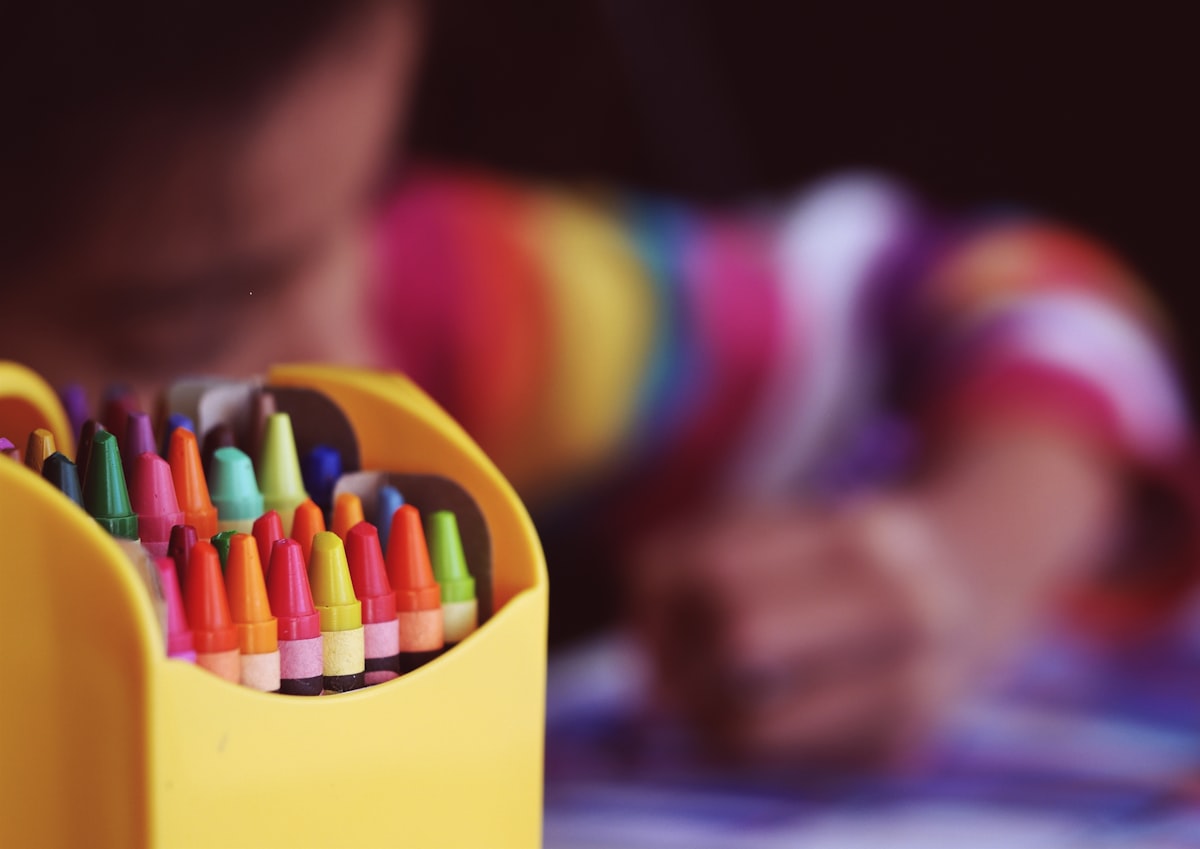
Colorful crayons with a child working on learning activities in the background
While hands-on activities should always come first for preschoolers, well-designed worksheets can be a valuable supplement once children are comfortable counting to at least 5 or 10 with real objects. Worksheets provide a different type of practice — transferring counting skills from three-dimensional objects to two-dimensional pictures, which is an important step toward abstract mathematical thinking.
What to Look for in Preschool Counting Worksheets
The best worksheets for this age group feature large, clear images that are easy to count. They include small number ranges (1 to 5 for beginners, 1 to 10 for more advanced counters). They provide ample space for little hands to write or circle answers. They use familiar, engaging pictures — animals, fruits, toys — rather than abstract shapes.
Avoid worksheets that pack too many problems on a single page or require fine motor skills beyond your child's ability. At this age, a worksheet with four to six counting problems is plenty. Browse our kindergarten counting worksheets to find materials that match your child's current level and grow with them as their skills develop.
How to Use Worksheets Effectively with Preschoolers
Keep worksheet sessions to five minutes or less. Sit with your child and work through the problems together — worksheets at this age are a shared activity, not independent work. Use real objects alongside the worksheet when possible. If the worksheet shows five apples, pull out five real objects and count them together before circling the answer. Always end on a success. If your child gets frustrated, stop and return to hands-on counting for a few days before trying worksheets again.
Common Counting Challenges and How to Help
Every preschooler encounters bumps along the counting road. Here are the most common challenges and practical strategies to address them.
Skipping numbers in the sequence: This is normal and resolves with practice. Don't correct every mistake — instead, model correct counting frequently. Counting songs and fingerplays are especially helpful because the melody provides a memory aid for the sequence.
Counting objects more than once: If your child counts the same object twice, try having them move each object to a separate pile as they count it. This physical separation makes it easier to keep track.
Not understanding cardinality: Some children can count perfectly but still can't answer "how many?" without recounting. Be patient — this is a conceptual leap that takes time. Keep asking "how many?" in everyday situations and model the answer yourself: "You counted four cars, so there are four cars."
Losing interest in counting activities: If counting feels like a chore, step back and find what excites your child. A dinosaur-loving preschooler might happily count toy dinosaurs but refuse to count blocks. Follow their interests and counting will follow naturally.
Preparing Your Preschooler for Kindergarten Math
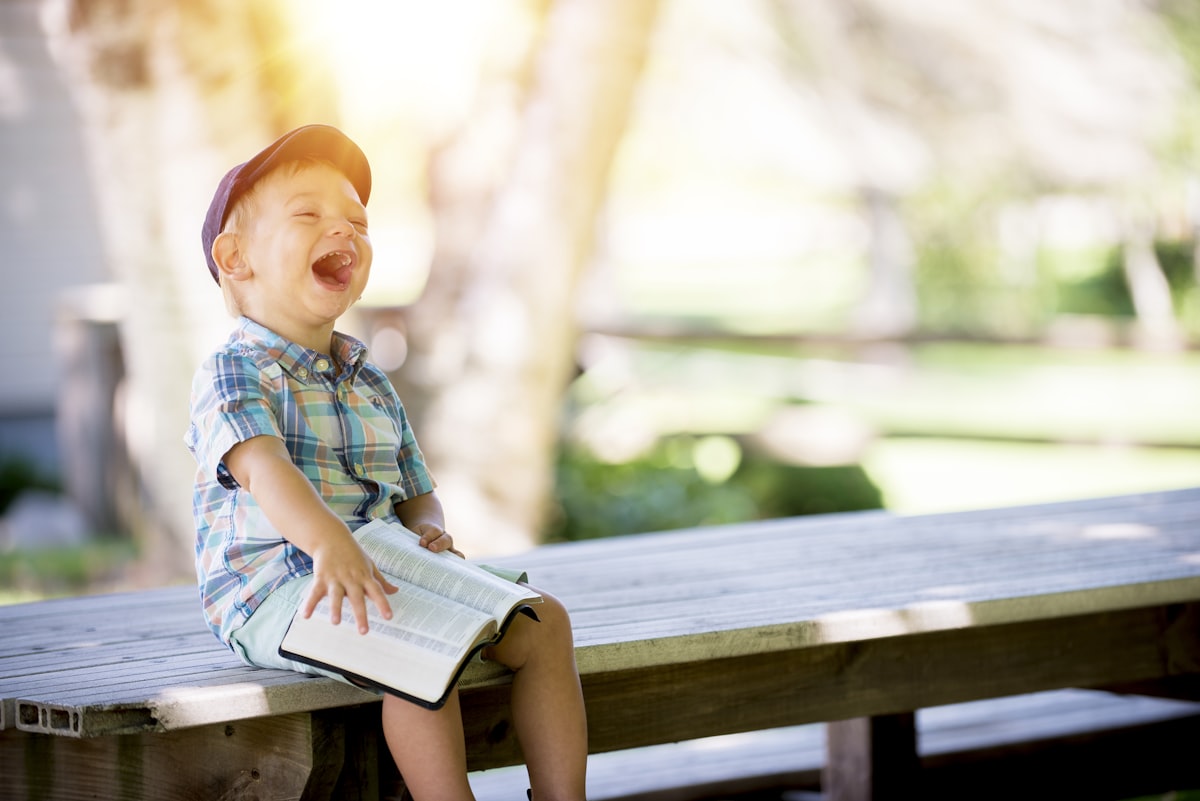
A happy young child laughing while holding a book outdoors
The counting skills your preschooler builds now will directly support their success in kindergarten math. When children enter kindergarten with a solid understanding of counting to 10, one-to-one correspondence, and basic cardinality, they're able to focus on new concepts like written numerals, addition, and subtraction rather than struggling to catch up on foundational skills.
That said, there's no need to rush. A preschooler who can confidently count to 10 with accurate one-to-one correspondence is well prepared for kindergarten — there's no advantage to pushing them to count to 100 before they're ready. Focus on depth of understanding rather than the highest number your child can reach.
If you're looking for the next step in your child's math journey, our guide on best math worksheets for kindergarten covers everything from number recognition and formation to early addition concepts. It's designed to pick up right where preschool counting skills leave off, providing a smooth transition into more structured math learning.
Common Core Standards Alignment
The counting skills covered in this guide directly prepare your child for the Common Core State Standards for kindergarten math. Here are the specific standards your preschooler is building toward:
CCSS.MATH.CONTENT.K.CC.A.1 — Count to 100 by ones and by tens.
CCSS.MATH.CONTENT.K.CC.A.2 — Count forward beginning from a given number within the known sequence.
CCSS.MATH.CONTENT.K.CC.A.3 — Write numbers from 0 to 20. Represent a number of objects with a written numeral 0-20.
CCSS.MATH.CONTENT.K.CC.B.4 — Understand the relationship between numbers and quantities; connect counting to cardinality.
CCSS.MATH.CONTENT.K.CC.B.5 — Count to answer "how many?" questions about as many as 20 things arranged in a line, a rectangular array, or a circle.
CCSS.MATH.CONTENT.K.CC.C.6 — Identify whether the number of objects in one group is greater than, less than, or equal to the number of objects in another group.
Every activity in this guide — from rote counting songs to one-to-one correspondence exercises to comparing groups — maps directly to these standards. By the time your preschooler enters kindergarten with these foundations in place, they'll be well positioned to meet and exceed these benchmarks.
The most important thing you can do right now is make counting a joyful, everyday experience. Count with your child at breakfast, during errands, at the playground, and before bed. Play counting games, sing counting songs, and celebrate every new number your child masters. When counting feels like fun rather than work, you're not just teaching a math skill — you're building a child who believes that math is something they can do and enjoy.